
Heal begins within.
Emotions and Disease – An Overlooked Link
Have you ever felt your heart ache during heartbreak or noticed a knot in your stomach when anxious? These sensations suggest a profound connection between the mind, body, and emotions—a relationship long recognised by health traditions. Ancient healing systems like Traditional Chinese Medicine (TCM) and Ayurveda teach that emotions are linked to specific organs and bodily functions. In other words, our feelings reside not only in our minds but also in our bodies.
Modern research supports this view. Emerging fields such as psychoneuroimmunology and somatic psychology investigate how stress, trauma, and chronic emotional suppression can weaken immunity, disrupt hormonal balance, and contribute to disease. Increasingly, healthcare professionals acknowledge that genuine healing requires addressing the emotional roots of illness as well as the physical symptoms.
Unresolved emotions may lie beneath chronic aches, digestive issues, or even heart disease. Neuroscience pioneer Candace Pert famously discovered that the same neuropeptides that carry emotion in the brain are found on receptors throughout the body – in organs, muscles, even skin – effectively “storing” emotional memory in our tissues. She put it simply: “Your body is your subconscious mind,” and unexpressed emotions are literally lodged in the body. When we suppress feelings of anger, grief, fear, or shame, those emotions don’t just disappear – our body keeps the score, often expressing the emotional pain through physical symptoms or illness.
At Inner Journeys, we explore how individual emotions are linked to specific organs and ailments, weaving together ancient wisdom and cutting-edge science. You’ll learn about the emotional roots of common health issues – from the classic association of the liver and anger to the link between lungs and grief – and discover holistic ways to release those stored feelings. Our goal is to offer compassionately delivered insight into the body-mind connection and inspire hope that by healing emotional trauma, you can also heal your body.
Your body is a wise and sensitive messenger. When emotions are unspoken or suppressed, your body often speaks for them—through pain, fatigue, or illness. The good news is that healing is always possible.
By addressing the emotional roots of disease in Somatic Therapy and other sessions, you open the door to deep and lasting transformation. You don’t have to carry old pain in your body any longer.
Emotions and Their Associated Body Organs
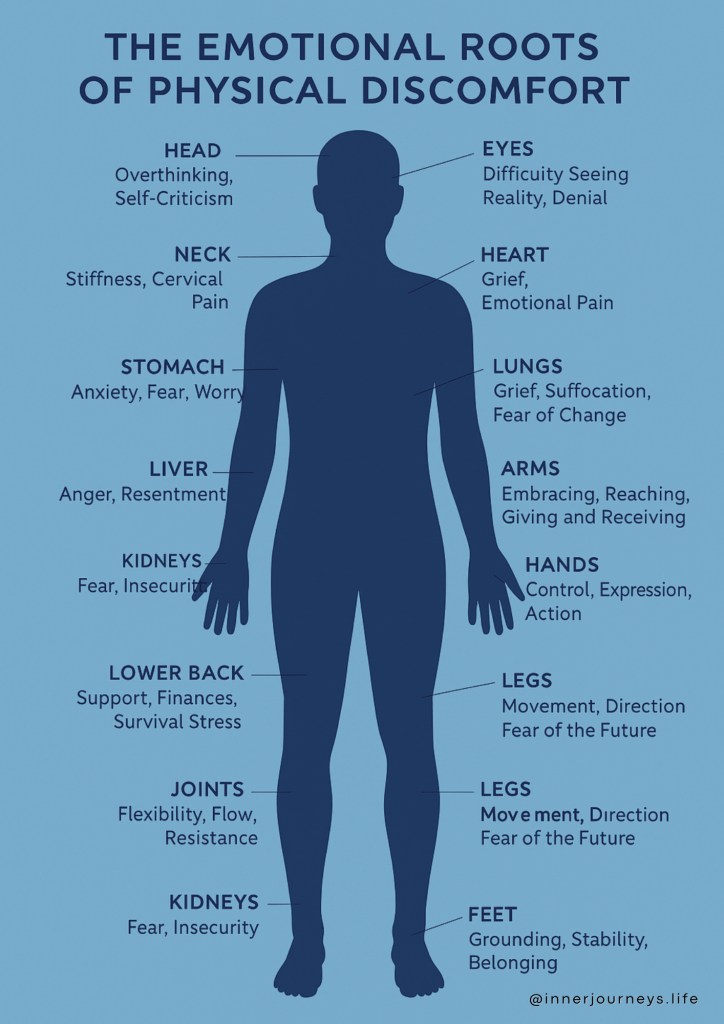
Our bodies speak the language of emotion. Each organ system is not only a physiological powerhouse but also an emotional reservoir. Below, we break down several organ-emotion connections, describing how an emotion might manifest physically, what traditional medicine says, and what modern psychosomatic theory has found. As you read, remember that everyone is unique – these patterns aren’t meant to blame a person for being sick, but to illuminate possible hidden triggers and avenues for healing.
An illustration of major organs and their associated emotions, according to holistic and traditional medical systems (e.g. TCM). For example, the chart links the lungs with grief, the kidneys with fear, the liver with anger, the heart with love, and the digestive organs with anxiety. These connections reflect age-old observations of how emotions can affect physical health.
Liver – Anger and Resentment
Do you tend to “boil over” with anger or stew in long-term resentment? The liver might be paying the price. In TCM, the liver is strongly associated with the emotion of anger; an old saying even labels an irritable person as “liverish.” Excessive anger or frustration is believed to disrupt the liver’s energy, leading to symptoms like tension headaches, dizziness, or high blood pressure. TCM doctors have observed that people with stagnant liver energy often report headaches, red face/eyes, or tendon problems, along with a tendency to feel irritable or bitter. Conversely, when the liver is out of balance, a person may feel anger more easily – it’s a two-way street.
Modern perspectives echo this link. Chronic anger triggers our fight-or-flight response, flooding the body with stress hormones that can strain the cardiovascular system and liver. One large study found that people with high perceived stress (often tied to anger and hostility) had a significantly greater risk of developing non-alcoholic fatty liver disease. Over time, unresolved anger and hostility are correlated with inflammation and even insulin resistance, which can burden the liver. Anger that is repressed (pushed down inward) may be especially harmful – some holistic practitioners note this could turn into self-directed resentment, possibly contributing to liver complaints or gallbladder issues (think of the idiom “gall and bitterness”).
On the flip side, releasing anger in healthy ways can be liberating for the liver. Many people find that expressing anger through constructive outlets – like yelling into a pillow, vigorous exercise, or assertive communication – coincides with improvements in liver-related symptoms such as tension headaches or digestive bile issues. If you carry a lot of suppressed rage or resentment, learning to acknowledge and let go of anger could do more than lift your mood; it might also support your liver’s vitality and hormonal balance.
Lungs – Grief and Sadness
That heaviness in your chest when you’re sad is no coincidence – the lungs are intimately connected to grief and deep sadness. Ever notice someone sighing heavily during sorrow? In TCM, the lungs (and the paired large intestine) correspond to grief, which can literally take our breath away. Practitioners say that unprocessed grief “constricts” lung energy, leading to symptoms like shortness of breath, chest tightness, frequent sighing or even skin problems, since in TCM the lungs also govern the skin boundary. Classic lung-imbalance signs include chronic cough, asthma, bronchitis, fatigue, and a tendency toward crying or depression. Many bereaved people indeed report a physical ache or emptiness in the chest.
Science has documented how profound grief affects the body. In studies of people who lost a spouse or child, researchers found that the immune system becomes suppressed in the acute phase of grief, and markers of inflammation rise sharply. This helps explain why bereaved individuals often fall ill or even have a higher risk of mortality in the months after a loss. Grief can literally inflame the body. Lungs, being our organs of breath and boundary with the outside world, often bear the brunt. Prolonged grief has been linked to increases in pro-inflammatory cytokines and reduced lung function, making one more susceptible to infections. In plain terms, heartbreak or bereavement can knock down our immune defences and “get us where we’re weak” – for many, that’s the respiratory system.
Emotionally, unresolved sadness may manifest as a lingering heaviness or even depression. People who haven’t been able to properly mourn a loss might develop chronic respiratory issues or a habit of shallow breathing. Crying is a natural lung-centric release – ever feel how a good cry can improve your breathing afterward? Tears and sobs are the body’s way of exhaling grief. If you’re dealing with stuck sadness, practices that work directly with the lungs can help: deep diaphragmatic breathing, sighing or vocal toning, and exercises like brisk walks or swimming that make you breathe fully. Consciously working with the breath sends a signal that it’s okay to let go – just as the lungs exhale stale air, you can release emotional pain. Over time, honouring your grief (rather than pushing it down) may ease lung-related symptoms and fortify your immune health.
Heart Issues – Love, Joy, and Heartbreak
The human heart isn’t just a pump – it’s long been seen as the seat of love, joy, and sorrow. We use phrases like “broken heart,” “heartache,” and “heavy-hearted” for a reason. In both Eastern and Western traditions, the heart is central to emotional experience. TCM associates the heart with the emotion of joy (or rather, an appropriate amount of joy), and notes that an imbalance can swing to either agitation (too much excitement) or melancholy (too little joy) . Symptoms of a disturbed heart energy in TCM include insomnia, restlessness, palpitations, and anxiety – very much like what we feel during emotional turmoil. When someone is deeply hurt in love or experiencing grief, they might have trouble sleeping, a racing heartbeat, or even chest pain.

Cardiology recognises an extreme form of this: “Broken Heart Syndrome,” known medically as stress-induced cardiomyopathy or Takotsubo syndrome. In this condition, a sudden emotional shock (like unexpected loss, betrayal, or even a severe fright) triggers a surge of stress hormones that stun the heart muscle, causing chest pain and transient heart failure that mimics a heart attack. Doctors have documented that intense grief, fear, or even anger can precipitate this syndrome – common triggers include the death of a loved one, domestic conflicts, or even overwhelming happy events. In Takotsubo cases, the patient’s coronary arteries are clear; it’s pure emotional stress “attacking” the heart. Fortunately, with rest, the heart often recovers in days or weeks, but it’s a dramatic example of how literal heartbreak can strike physically.
Even less acute emotions affect the heart. Chronic stress or unresolved heartbreak contributes to hypertension (high blood pressure), arrhythmias, and increased risk of heart disease over time. The connection between anxiety/depression and heart health is well established in medical research – depression after cardiac surgery, for instance, slows healing, and anxiety can exacerbate palpitations or blood pressure swings. Conversely, positive emotions like love, laughter, and social connection have protective effects: they release oxytocin, trigger the vagus nerve’s calming response (more on that later), and improve heart rate variability, all of which buffer the heart from stress.
If you’ve suffered emotional heartbreak or trauma, tending to your heart means both physical and emotional care. This might include practices like heart-focused meditation (sending compassion to your heart area), gentle cardio exercise (to strengthen the heart muscle and release endorphins), and allowing yourself to feel love and joy again at your own pace. Remember, the heart’s amazing capacity to heal – emotionally and physically – is why even a “broken” heart can become whole again. With support, joy and connection can return, and as your emotional heart heals, your physical heart benefits from the reduced stress and renewed zest for life.
Stomach and Digestive System – Anxiety, Worry, Guilt
We often speak of “gut feelings” or having “butterflies in the stomach” under stress. Indeed, the digestive system – including the stomach, intestines, pancreas, and spleen – is extremely sensitive to our emotional state. Anxiety and worry are like poison to the gut’s peace. In TCM, the Spleen (which in their framework covers many digestive functions) is associated with overthinking, excessive worry, or obsessing. When we churn mentally on anxiety or guilt, our digestion can literally churn too. Symptoms of a Spleen/digestive imbalance include poor appetite, bloating, loose stools or IBS, fatigue, and even easy bruising (since digestion in TCM ties to blood production). Simply put, stress can tie your stomach in knots – and chronic worry can weaken your ability to properly absorb nourishment.

Modern gastroenterology absolutely agrees that there is a potent gut-brain connection. The gut has its own nervous network (sometimes called the “second brain” or enteric nervous system) that communicates back and forth with the brain. When you feel anxious, your brain releases stress hormones that can alter gut motility (speeding it up or slowing it down) and change the secretion of stomach acid and enzymes. This is why anxiety might give one person acid reflux or nausea, and another person diarrhoea or constipation. Irritable Bowel Syndrome (IBS), a functional gut disorder, is notorious for being worsened by stress. For decades, doctors observed that anxiety and depression often go hand-in-hand with IBS flares. In fact, one prevailing theory is that unfelt emotions get “swallowed” and held in the gut, contributing to conditions like ulcers, colitis, or irritable bowels. It’s telling that before modern treatments, peptic ulcers were largely attributed to stress (we now know bacteria are involved, but stress is still a key factor in symptom severity).
Another emotion, guilt, often gnaws at the gut as well. We speak of “gut-wrenching” guilt or not being able to stomach something we feel bad about. Persistent guilt or shame (closely related emotions) triggers that same stress response, which can lead to indigestion or even eating disorders (some people cope by not eating, others by emotional overeating to soothe the guilt – both of which unbalance digestion further). There’s also a link between worry and the pancreas in some traditions, suggesting that excessive worry can affect blood sugar metabolism. While research is ongoing, chronic stress does elevate cortisol, which can mess with insulin and blood sugar levels, potentially straining the pancreas over time.
The encouraging news is that calming the mind can calm the belly. Practices like mindful breathing, meditation, and relaxation exercises have been shown to help disorders like IBS, acid reflux, and ulcerative colitis by reducing the stress signals that reach the gut. Therapies that combine psychological support with gut-focused treatment (like gut-directed hypnotherapy or cognitive-behavioural therapy for IBS) demonstrate how addressing emotions improves digestive function. If you carry a lot of anxiety in your stomach, learning skills to self-soothe – such as doing a body scan to release belly tension, or journaling to get worries out of your head – can literally improve your digestion. Diet matters too, but even the healthiest diet may not digest well in a constant fight-or-flight state. So, tending to your emotional wellbeing is an integral part of healing any digestive or gastrointestinal issue. Your gut will thank you when you find ways to “rest and digest”both physically and emotionally. (Read more about Gut Motility Issues)
Kidneys – Fear and Insecurity
A jolt of fear can send a chill down your spine – and perhaps straight to your kidneys. In TCM, the kidneys (and their partner organ, the bladder) correspond to fear as the primary emotion. The idea is that our kidneys are like batteries of life force; intense or chronic fear drains them. Symptoms of a kidney Qi (energy) imbalance in TCM can include frequent urination, night sweats, low back pain, knee weakness, or ringing in the ears. You might recognise that feeling of pee your pants when terrified – indeed, extreme fear can cause loss of bladder control as the body goes into shock. Even the adrenal glands, which sit atop the kidneys, pump out adrenaline and cortisol when we’re scared. Live in constant fear, and you have the adrenals (and by proximity, kidneys) working overtime.
From a Western perspective, insecurity and chronic anxiety (a form of sustained fear) keeps the sympathetic nervous system activated. This leads to continually elevated levels of stress hormones that can wreak havoc on many organs, including the kidneys. High blood pressure, for example, often has an anxiety/stress component – and hypertension is infamous for damaging kidneys over time by stressing the delicate filtration units (nephrons). A Swedish cohort study on stress-related disorders (like PTSD and acute stress reactions) found a higher risk of developing kidney disease in those patients compared to the general population . The kidneys also regulate fluids and electrolytes; when we’re anxious, we might sweat more, breathe differently, even change our fluid intake habits (some overdrink water out of anxiety, others forget to hydrate), all of which can strain kidney function.
Biologically, fear is meant to be a short-term state – you encounter a threat, your body surges adrenaline (thanks to the adrenals/kidneys), you either escape or the threat passes, and then you return to baseline. But if you grew up in an unsafe environment or are currently in a state of prolonged insecurity, that fight-or-flight never fully turns off. You might then experience signs of adrenal fatigue or kidney “yang” deficiency: exhaustion, lower back pain, poor appetite, feeling cold, or frequent urination especially at night. Even hair loss or dental issues can be tied to kidneys in TCM, since kidneys “govern” bones and hair; interestingly, severe stress is known to cause hair to thin or go gray, which aligns with that view.
Healing the energy of fear means finding ways to restore safety to your nervous system. Physically, practices that strengthen the lower back and kidney area – like gentle kidney massages, heating pads for warmth, or exercises such as yoga poses that target the lower spine – can be supportive. Emotionally, addressing the sources of insecurity (perhaps with a therapist, support group, or spiritual practice) is key. This might involve inner child work to assure the frightened part of you that you are safe now, or setting up external resources and boundaries so you feel more secure in daily life. Breathwork is particularly powerful for fear: when you slow your breath, you activate the vagus nerve, telling your body “it’s okay, we’re safe.” Over time, as fear releases its grip, you may find improvements in things like blood pressure, energy levels, and even libido (in TCM, kidney energy is linked to sexual vitality, which is often suppressed by fear or trauma). Rebuilding a sense of security replenishes your kidney essence, allowing you to face life with greater resilience and courage.
Throat (Thyroid) – Suppressed Expression and “Swallowed” Emotions
Have you ever had a lump in your throat from unspoken words or felt your throat tighten when holding back tears? The throat center, including the thyroid gland and vocal apparatus, is strongly influenced by whether we express or repress our emotions. Many holistic traditions (and the chakra system in yoga) associate the throat chakra with communication and truth-telling. When we stifle our self-expression – bite back anger, swallow our sadness, or silence our truth to avoid conflict – it’s thought to congest energy in the throat area. Over time, this could contribute to issues like chronic throat clearing, laryngitis, tension in the neck and shoulders, or even thyroid dysfunction.

The thyroid, a butterfly-shaped gland in your neck, regulates metabolism and energy. Interestingly, thyroid disorders (especially hypothyroidism) disproportionately affect women, who in many societies have been conditioned to “hold their tongue” or prioritize others’ voices over their own. Could there be a link? In 2007, Oprah Winfrey invited a doctor on her show who suggested that repressed anger might contribute to thyroid problems in women – a controversial idea at the time. While this was met with skepticism by some conventional experts, recent insights lend some plausibility. The stress of unexpressed emotions often means chronically elevated cortisol (the stress hormone). High cortisol over time can suppress the production of thyroid-stimulating hormone (TSH) , essentially turning down the thyroid’s activity. Additionally, prolonged stress can contribute to autoimmune reactions (like Hashimoto’s thyroiditis, a common cause of hypothyroidism) by overtaxing the immune system. In short, there is a biological pathway where emotional suppression (stress) -> high cortisol -> lowered thyroid function.
Beyond hormones, think of the muscular tension: holding back tears or words often creates a literal tight “choke” in the throat muscles. Many people with suppressed expression experience a chronic lump-in-throat sensation (Globus sensation) or tight neck muscles. Over the years, this might affect circulation to the thyroid or cause chronic inflammation in the area. There’s also a behavioural aspect: someone who constantly “bites their tongue” might not advocate for their own needs, leading to lifestyle stressors that indirectly harm health (like staying in a toxic job or relationship because they can’t speak up). So the throat issue is both symbolic and physical.
Healing the throat and thyroid on an emotional level involves reclaiming your voice. This might mean practicing speaking your truth in small ways: journaling unfiltered thoughts, singing in the shower (singing is fantastic for the throat chakra and vagus nerve), or telling a trusted friend about something you’ve been holding in. Therapies like voice release exercises or even professional coaching in communication can be surprisingly healing for chronic throat tightness. On the physical side, supporting your thyroid with proper nutrition (selenium, iodine as needed) and stress reduction is important – but don’t overlook the power of saying what you need to say. Even gentle humming or throat massage can send signals of relief to that area. As you begin to express long-held emotions – whether it’s anger that needed a healthy outlet or sadness that needed to be acknowledged – you may find that sensations like throat constriction lessen. Many clients report their thyroid levels improve or stabilise when they combine medical treatment with emotional work. Your voice matters, and when it flows freely, it’s amazing how the body can regain balance.
Pelvis and Reproductive Organs – Shame, Guilt, and Sexual Trauma
The pelvic region is a deep repository of our most primal emotions and experiences. Our roots – literally our reproductive organs, lower intestines, and pelvic floor – can carry the imprint of shame, guilt, and sexual trauma. Culturally, many of us are taught to hold tension in our pelvis: we clench our buttocks and tighten our hip muscles when stressed or when trying to maintain control. Emotions like sexual shame or unresolved trauma from abuse often manifest as chronic pelvic pain, menstrual disorders, or sexual dysfunction. For instance, survivors of childhood sexual abuse have higher rates of issues such as pelvic floor dysfunction, painful intercourse, endometriosis, and even irritable bowel syndrome (which involves the pelvic area). The body may unconsciously tighten muscles in the vagina or pelvis as a protective response long after the actual threat is gone, leading to conditions like vaginismus or pelvic pain syndromes.
Research supports these correlations: studies find a significantly higher prevalence of sexual abuse history among those with chronic pelvic pain or fibromyalgia compared to the general population. In one review, women with chronic pain (pelvic, back, headaches, etc.) were far more likely to have a history of sexual trauma, and they also tended to have more severe pain and more medical problems in general than women without such a history. It appears that unhealed trauma in the sacral area can dysregulate the nervous system in a way that amplifies pain signals and disrupts the hormonal balance governing the reproductive organs. For example, extreme or chronic stress (often rooted in fear or shame from trauma) can alter the release of reproductive hormones via the hypothalamic-pituitary-gonadal axis, potentially affecting menstrual cycles, fertility, or libido.
Guilt – particularly sexual guilt or guilt from violations – is another heavy emotion that can lodge in the pelvic region. People may feel “dirty” or withdraw from fully inhabiting that part of their body. This disconnection can lead to ignoring symptoms (not getting gynaecological issues checked promptly) or not caring for one’s sexual health. There’s also the energy perspective: the second chakra (in yoga) resides in the pelvic area and is associated with creativity, sexuality, and emotions. When guilt and shame block this centre, one might experience a lack of creative flow or persistent low back ache and hip stiffness.
Healing the pelvis requires an especially gentle, holistic approach because it’s so sensitive and tied to core identity and safety. Somatic therapies are very effective here – for instance, trauma-informed yoga or pelvic floor physical therapy can teach the body that it’s safe to release those clenched muscles gradually. Therapeutic tremoring techniques like TRE (Tension & Trauma Releasing Exercises) specifically help release deep muscle guarding in the psoas and pelvic floor, often leading to emotional catharsis as well. On an emotional level, working through shame with a compassionate therapist (e.g. through inner child healing or EMDR for trauma) can start to unburden this area. Sometimes creative expression – such as art or dance that focuses on the hips – allows one to reclaim a sense of ownership and positivity in the pelvic region, replacing shame with empowerment.
Crucially, any approach to pelvic/emotional healing should proceed at the survivor’s pace. As trust and safety rebuild, many people see chronic pelvic issues improve: pains lessen, cycles regulate, and pleasure returns. Releasing shame and guilt not only frees your mind, it liberates your body’s core, allowing vital life energy (and often a renewed sensuality and creativity) to flow from your centre. This area, once a source of pain, can become a wellspring of strength when healed – proof that even the deepest wounds can mend with the right support.
Bones & Skeletal System – Stability & Deep Trauma
Symptoms: Chronic joint pain, arthritis, osteoporosis, posture issues
Traditional Wisdom: In many holistic healing traditions, bones symbolise our core strength, stability, and foundational support. Emotional instability, prolonged stress, or unresolved deep-seated trauma can metaphorically and physically weaken this core foundation. When we feel emotionally unsupported or chronically insecure, our body may manifest these feelings as structural instability, vulnerability, or pain in our bones and joints.
Modern research confirms the link between chronic emotional stress and skeletal health. Prolonged exposure to stress hormones like cortisol not only triggers inflammation but also disrupts calcium absorption and bone metabolism. Over time, high cortisol levels lead to decreased bone density, making bones more susceptible to fractures and conditions like osteoporosis. Additionally, chronic stress-related inflammation can exacerbate arthritis, causing persistent joint pain and stiffness. Emotional trauma or stress that results in habitual muscle tension can also misalign posture, further contributing to spinal and joint issues. Addressing these deep-rooted emotional traumas and stressors can therefore significantly improve skeletal health, reduce inflammation, and support better overall physical stability.
Skin Diseases
When people face skin problems—whether eczema, psoriasis, acne, or stubborn rashes—they usually search for physical causes. But your skin speaks the language of your emotions and experiences.
Your skin is your boundary between your inner and outer world. An interface between you and the world—a place where emotions like shame, rejection, overwhelm, or anger can become inscribed as inflammation or itching. This connection isn’t just symbolic; it’s backed by research:
- Stress and anxiety significantly impact skin inflammation and barrier function, often making conditions like psoriasis and eczema worse.
- Skin disorders are linked with issues around self-image and identity, including feelings of shame, low self-esteem, and social anxiety.
- The gut-brain-skin connection explains how emotional distress and gut imbalances (dysbiosis) trigger skin issues. Your gut health and emotional health are deeply intertwined, influencing conditions like acne and eczema. The gut–brain–skin axis outlines a pathway by which emotional and physiological stress translates into skin inflammation: Gut microbiome imbalances (dysbiosis) influence systemic inflammation and skin health, affecting conditions like acne, eczema, and psoriasis. Stress increases cortisol, which alters gut flora and barrier function, elevating skin inflammation.
In therapeutic sessions, we regularly discover emotional patterns beneath chronic skin conditions. For example:
- Psoriasis can reflect buried anger or suppressed self-expression. Around 50% or more of psoriasis patients report stress as a trigger; anxiety and depression often co-occur with chronic skin ailments
- Eczema often speaks of deep-seated vulnerability or fears of rejection.
- Scars and persistent wounds can carry unresolved guilt or past traumas.
🌀 How We Heal: Beyond Skin-Deep
When we address emotional roots through healing modalities like Inner Child Healing, Hypnotherapy, Somatic Work, Parts Therapy, and Karmic Healing, many clients experience transformative shifts—sometimes dramatically:
- Reduced inflammation and fewer flare-ups.
- Faster healing and decreased skin sensitivity.
- Enhanced self-esteem and emotional resilience.
Scientific research aligns perfectly with our clinical experience. Emerging fields like psychodermatology and hypnodermatology have confirmed that hypnosis significantly reduces skin inflammation, discomfort, and flare-ups. Emotional distress plays a key role in skin conditions.
When emotional wounds are faced, held, and healed, the body naturally remembers how to heal itself. Your skin can become a reflection of your self-acceptance, not your distress. Your skin isn’t simply reacting—it’s reflecting your inner emotional landscape. When you heal the emotional wounds, your skin naturally follows suit. Remember, clear skin is not just a surface goal. It’s about embracing your authentic self, free from the emotional burdens of the past.
Modern Research on the Body-Mind Connection
For decades, scientists doubted the stories of patients who sensed that stress or heartbreak made them ill. But today, an avalanche of research in psychoneuroimmunology and mind-body medicine validates that emotions and physiology are deeply intertwined. Here, we highlight some key findings and thought leaders bridging the gap between emotional and physical health:
• Candace Pert’s “Molecules of Emotion”: Neuroscientist Dr. Candace Pert, a pioneer in mind-body research, discovered the opiate receptor in the brain and later found that emotional neuropeptides circulate widely. She explained that every organ and cell in our body has receptors for these emotion-carrying molecules. As a result, “organs, tissues, skin, muscle, and endocrine glands – they all have peptide receptors on them and can access and store emotional information,” Pert noted. This means your emotional memories are encoded throughout your body, not just in the brain. Pert famously said, “Your body is your subconscious mind,” emphasising that what we do not consciously process will be embodied one way or another. Her work gave scientific credence to what many holistic healers already believed: unexpressed emotions are stored in the body. This finding opened up a new understanding of conditions like PTSD, where triggers can provoke intense bodily reactions even without conscious memory – the body literally “remembers” via these molecules of emotion.
• Bessel van der Kolk and Trauma Research: Dr Bessel van der Kolk, a leading trauma researcher and author of The Body Keeps the Score, has documented how severe emotional trauma changes the brain and body. As early as 1994, he wrote that “a trauma is stored in somatic memory and expressed as changes in the biological stress response.” In other words, traumatic experiences get locked in the body’s memory, leading to chronic overactivation of stress pathways. His research using brain scans on PTSD patients shows that when they relive traumatic memories, the brain regions for speech (Broca’s area) go offline, while areas governing fear and sensation light up – suggesting the trauma is held as wordless physical sensations rather than verbal narrative. This explains why survivors may experience flashbacks as body pain, gut issues, or headaches. Van der Kolk’s work also highlights altered hormone profiles: trauma survivors often have abnormally low cortisol and high adrenaline levels, contributing to insomnia, irritability, and immune problems . Importantly, he and others have found that body-centered therapies (like EMDR, yoga, or somatic experiencing) can restore normal nervous system regulation when talk therapy alone sometimes cannot. This is a powerful endorsement of the idea that to truly heal emotional wounds, we must include the body in treatment.
• Dr. Gabor Maté’s Insights on Stress and Disease: Dr. Gabor Maté, an internationally renowned physician, has extensively studied the link between emotional repression and chronic illness. He observes that many patients with cancer, autoimmune diseases, or severe addictions have a common trait: a tendency to suppress their legitimate emotions (to be “nice” or not burden others) and to internalize stress. Maté states bluntly that “emotional stress is a major cause of physical illness, from cancer to autoimmune conditions and many other chronic diseases.” . He points out that the same brain-body systems which process emotions (like the limbic system and hypothalamus) are tightly connected to the hormonal system and the immune system . Chronic stress can lead to immune dysregulation – for example, by raising cortisol and adrenaline constantly, you eventually exhaust the immune defenses or trigger inflammation. Maté’s book When the Body Says No presents case studies where people’s inability to say “no” (to set boundaries or express anger) correlates with illnesses like multiple sclerosis, rheumatoid arthritis, or ALS. The premise is that when you won’t say no, your body will say it for you – in the form of illness that forces you to slow down or seek care . While his work is sometimes seen as controversial for implying a psychosomatic component to serious diseases, it aligns with a wealth of studies linking chronic stress to inflammation (a driving factor in conditions like heart disease, diabetes, and cancer) . Maté advocates for compassionate self-inquiry to recognize and release buried stresses, and for creating a life that is authentic to your emotional needs as a way to prevent and heal disease.
• Bruce Lipton and Epigenetics: Dr. Bruce Lipton, a cell biologist, made waves with his research in epigenetics – the science of how genes are expressed (turned on/off) by environment. His experiments showed that genetically identical cells could become muscle, bone, or fat simply by changing the chemical environment they were in . From this, Lipton extrapolated that in our bodies, it’s not just our DNA that determines health, but the signals our cells receive from their surroundings – which include hormonal and chemical messages influenced by our thoughts, beliefs, and emotions. He explains that our perceptions of the world are translated into chemical signals via the nervous system, and these signals can direct gene expression . For example, if you perceive everything as a threat (perhaps due to unresolved trauma), your cells bathe in stress hormones that might turn on genes for inflammation and turn off genes for growth and repair. Conversely, positive beliefs and feelings of safety can create a biochemical milieu where healing genes activate. Lipton famously said we are not victims of our genes, because by changing our perceptions, we change the signals, and thus we can influence our genetic destiny . This emerging field provides a molecular mechanism for the mind-body connection – showing that mindset and emotional environment shape our physical health at the cellular level.
• Psychosomatic Illness and Somatization: The term “psychosomatic” is often misunderstood as “imaginary illness,” but it truly means a real physical condition that is significantly influenced by the mind or emotions. Modern medicine acknowledges many such links. Chronic anxiety causing hypertension and ulcers, depression increasing the perception of pain, or repressed emotions leading to conversion disorders (where psychological distress causes symptoms like paralysis or non-epileptic seizures) are well documented. Studies have shown that people who have difficulty expressing emotions (a trait called alexithymia) tend to suffer more unexplained physical symptoms. The DSM-5 (manual of psychiatric diagnosis) even has somatic symptom disorder to describe this mind-body interplay. One striking statistic from the American Medical Association is that stress is a factor in 75-90% of all doctor visits – whether it’s as a direct cause or an aggravating factor. Conditions like tension headaches, fibromyalgia, chronic fatigue, and irritable bowel are often considered classic psychosomatic illnesses where emotional stress amplifies physical pain. But even in diseases with a clear organic pathology (like autoimmune disorders or cancer), stress and emotion levels can influence the course of illness and recovery.
• The Vagus Nerve and Emotional Regulation: A key player in the physiology of emotions is the vagus nerve – the long cranial nerve that wanders from the brainstem down through the neck into the heart, lungs, and gut. The vagus nerve is the main component of our parasympathetic (“rest and digest”) nervous system, and it acts as a brake on the stress response. When you exhale slowly or relax, the vagus nerve releases neurotransmitters like acetylcholine that tell your heart to slow down, your gut to resume digesting, and your inflammation levels to drop. Psychologists have found that people with higher vagal tone (a measure of vagus nerve activity, often reflected in more variability in heart rate) have better emotional resilience and regulation. They’re literally more flexible in shifting from stress to calm states. According to polyvagal theory (developed by Dr. Stephen Porges), the vagus nerve has two branches: one that promotes social engagement and calm (ventral vagal), and one that can induce shutdown or dissociation in extreme threat (dorsal vagal). Healthy emotion processing involves being able to stay in or return to the ventral vagal state of safety after a stress. If we lack vagal tone, we might get stuck in fight-or-flight (sympathetic overdrive) or in numb freeze states – both of which harm our organs by either chronic hyperarousal or lack of necessary activity. The vagus is literally the mind-body connector: it links mental and physical processes, making them inseparable. Stimulating the vagus (through deep breathing, humming, gargling, or vagus nerve exercises) has been shown to improve depression and anxiety and even reduce inflammation in conditions like arthritis. In essence, a strong vagus response helps translate emotional equilibrium into physical health by coordinating heart rate, digestion, and immune function. This is why many holistic therapies emphasise breathing, chanting, or relaxation techniques – they are toning the vagus nerve, teaching the body to be safe and thereby optimising emotional and organ balance.
These researchers and findings underscore a clear message: the mind and body are one unit, and treating them separately means missing the full story. Emotions like anger, grief, fear, and shame have real, measurable effects on our organs (through hormones, immune mediators, and nerve signals). Likewise, working with the body – through breath, movement, touch, and even medications – can significantly alter our emotional landscape. This two-way communication is constant. As Dr. Pert quipped, “the body is the subconscious mind,” and Dr. van der Kolk reminds us “the body keeps the score.” Luckily, modern medicine is moving beyond viewing the body as a machine; there’s growing acceptance that to heal one, you must listen to the other. In the next section, we’ll explore how holistic healing modalities make use of this integrated view to help people release stored emotions and regain health.
Holistic Healing Approaches for Releasing Stored Emotions
Healing from the emotional roots of disease requires a whole-person approach. It’s not enough to take a pill for a headache if that headache is your body signalling unprocessed grief or rage. Holistic therapies aim to address the emotional body and physical body together, providing safe avenues for expression, release, and reintegration. At InnerJourneys.life, we specialize in exactly this kind of integrative healing. We offer modalities that gently guide you to tap into the body’s wisdom, uncover the emotional story behind ailments, and let go of the pain that’s been locked inside. Here are several powerful approaches to consider:
• Inner Child Healing (Hypnotherapy): Inner Child Healing is a therapeutic journey to meet and heal the younger parts of yourself that carry past wounds. Often, the roots of present-day emotional triggers (and even some health issues) lie in childhood experiences – times when you felt afraid, unloved, or angry but couldn’t express it. Through gentle hypnotherapy, Inner Child sessions help you safely access subconscious memories and feelings. You might reconnect with a five-year-old you who felt abandoned, for example, and give that child the comfort and voice they never had. As you do, the emotions “stuck” from that time can be released. At Inner Journeys, we combine Inner Child Healing with somatic release techniques: under hypnosis, clients are guided to notice where in their body they hold certain feelings (maybe a tight chest or clenched gut) and then gradually let those sensations unwind. This process can lead to profound liberation – many people report that after Inner Child work, they no longer experience certain psychosomatic symptoms, or they finally shed behaviours like people-pleasing or constant anxiety that were tied to their childhood trauma. By reparenting your inner child, you essentially rewrite the deep programs in your subconscious (which your body has been dutifully acting out). The result is often a lighter feeling in both body and heart, as if a great weight has been lifted. Read more
• Somatic Therapy (Body-Focused Trauma Release): Somatic Therapy is all about listening to the body and releasing what words alone cannot. “Soma” means body, and somatic therapies include practices like Somatic Experiencing®, sensorimotor psychotherapy, and our own customized bodywork sessions at Inner Journeys. These approaches start with the premise that trauma and stress live in the body as stored energy – as Dr. Peter Levine (creator of Somatic Experiencing) says, the body has a natural trauma release process (like an animal shaking after a scare) that humans often interrupt. In somatic sessions, you’ll be guided to tune into your physical sensations, perhaps noticing a tight throat or a tense shoulder, and gently explore them. By bringing mindful awareness and breath to these areas, the “fight-flight-freeze” energy can be discharged. Sometimes subtle movements or therapeutic touch are used to help the body feel safe enough to relax old holding patterns. For example, you might suddenly take a deep, spontaneous breath or feel a shaking in your legs – these are signs the body is releasing trauma. At InnerJourneys, our Somatic Therapy often includes exercises to activate the parasympathetic response (to “finally let your nervous system kick into relax mode”) . We might incorporate guided imagery, such as envisioning a safe place, while also doing something physical like pushing gently against a wall to simulate completing a defensive action that was halted in a past trauma. The results can be remarkable: clients often report sleeping better, a reduction in chronic pain, and a newfound sense of being “in my body” rather than disconnected. Scientific studies on somatic therapies have shown positive outcomes for PTSD symptoms and anxiety, validating that when we release trauma from the body, the mind naturally follows towards healing. Read more
• Hypnotherapy and Guided Imagery: The subconscious mind often speaks in images and symbols, and it influences our body chemistry in ways we might not realise. Clinical hypnotherapy is a gentle yet powerful modality to communicate with your subconscious – that part of you that might, for example, keep your muscles tense because it thinks you’re still in danger. In a hypnotherapy session (which can overlap with inner child work as mentioned), you are guided into a relaxed trance state where your critical mind is quieter and your imaginative mind is more active. In this state, we can offer positive suggestions to your subconscious and even “reframe” traumatic memories. For instance, if your body has been clinging to the memory of a car accident, under hypnosis we might help you review that memory but imagine releasing the shock and seeing yourself come out safe. The body often responds to these imaginative rehearsals as if they are real – letting go of the trauma response. Guided imagery techniques can also directly impact physical processes: imagery of warm golden light in the belly can increase blood flow there (useful for digestive issues), or imagining speaking up to a bully could release the throat. At InnerJourneys, we incorporate hypnotic guided meditations tailored to the client’s needs – such as a visualization of cutting energetic cords with someone who hurt you (to release lingering emotional pain), or meeting a wise guide who gives you a healing message for your ailing body part. By engaging the mind’s eye and bypassing resistance, hypnotherapy often helps achieve in a few sessions what might take months with conscious effort. It’s an excellent complement to somatic work because it addresses the mental narratives and beliefs attached to your symptoms (“I’ll never heal,” “I must hold this in,” etc.) and transforms them at the root level. Read more
• Shadow Work and Emotional Integration: Not all emotions that cause illness are obvious – some lurk in the “shadow” of our psyche, the parts of ourselves we’ve disowned or deemed unacceptable. Shadow Work, as practised in Jungian psychology and adopted by many holistic healers, involves bringing those hidden aspects into the light. For example, you might pride yourself on being always calm and kind – your shadow might be the rage or assertiveness you’ve suppressed. That suppressed rage could be eating away at your liver or causing chronic tension. In Shadow Work, often guided by a therapist or done in workshops, you engage in exercises to personify and dialogue with your shadow emotions. You might write an angry letter (that you don’t send) or act out a scenario in a safe context where you let your shadow side speak freely. At first, this can be uncomfortable, but it is incredibly liberating and healing. At our centre, we combine Shadow Work with hypnotherapy and inner child healing, because usually the shadow formed as a protective mechanism in childhood. By acknowledging these disowned feelings – be it hatred, jealousy, or even neediness and vulnerability – you reclaim the energy spent repressing them. Clients often describe feeling more whole and energised after shadow integration, as if they’ve welcomed back a part of themselves. Physical symptoms that reflect inner conflict (like autoimmune issues, which symbolically are the body attacking itself) can improve when the inner battle ceases. The truth is, every emotion has a purpose – even “ugly” ones like anger can set boundaries, and fear can keep us safe. Shadow Work helps you harness the positive intent of those emotions in healthy ways, so they no longer need to manifest through illness to get your attention. Read more
Ultimately, all these modalities aim toward one goal: to help you feel, deal, and heal. By accessing the body-mind connection, they allow you to process emotions that have been stuck in a feedback loop with your organs. Which approach is right for you can depend on your personality and specific situation – often a combination works best. For example, one of our clients with chronic fatigue (linked to deep emotional burnout) did a course of Inner Child hypnotherapy to handle past trauma, supplemented it with Reiki for energy support, and added gentle yoga to re-invigorate her body; over a few months, she saw dramatic improvements in both energy levels and emotional resilience. We’ll often tailor a program that might start with Somatic Therapy (to get immediate physical tension release) and then transition into Inner Child/Shadow Work (to address the cognitive-emotional patterns), with some energy healing or breathwork sprinkled throughout to maintain balance.
The common thread in all holistic therapies is compassionate awareness. Rather than seeing your body as betraying you with illness, you learn to see it as a wise messenger – one that may be guiding you toward unresolved emotional wounds. By working WITH your body and emotions, instead of against them, true healing can happen. Many people emerge from this process not only symptom-free or improved, but also with a greater sense of self, empowerment, and peace. They learn tools to manage stress and emotions for the rest of their lives, preventing future “build-up” of psychosomatic issues. This is the essence of holistic therapy: it treats you as a whole person – body, mind, heart, and spirit – and in doing so, helps you become whole again.
Healing the Emotional Body to Heal the Physical Body
The journey of emotional healing is deeply intertwined with physical wellness. As we’ve explored, your aches and ailments may have an emotional story to tell – whether it’s a liver crying out in anger, a heart heavy with grief, or a throat closed off from unsaid words. The empowering truth is that when you address the emotional root of disease, you create the conditions for true and lasting healing. Far from being “all in your head,” these emotional roots are very real influences on your cells, tissues, and organs. By tending to them, you’re not blaming yourself for being sick; you’re actually honoring yourself by leaving no stone unturned on the path to wellness.
Healing emotional trauma and stress is indeed possible – and it’s never too late. The body has an amazing capacity to recover and regenerate once the chronic stress burden is lifted. Even memories and feelings that have been buried for years can be gently brought to light and released, freeing up that energy for vitality, immunity, and joy. Many people who commit to holistic emotional work find that not only do their physical symptoms diminish, but they also feel more alive than they have in years. It’s as if by releasing old pain, they made space inside for life – for happiness, creativity, and connection to flow in.
If you recognize yourself in any of the patterns described – perhaps you’ve had unexplained symptoms or persistent health issues that standard treatments haven’t fully resolved – consider this an invitation to explore deeper. At InnerJourneys.life, we are here to support you with compassion, skill, and a wealth of healing modalities. You don’t have to navigate this alone. Our experienced practitioners can help you safely uncover the emotional layers of your condition and guide you through therapies like Somatic Release, Inner Child Healing, Hypnotherapy, and more, all tailored to your comfort level. We believe in creating a safe, nurturing space for you to do this courageous inner work. As you peel back the layers of hurt and stress, you’ll be met with understanding and tools that empower you to transform that pain into growth.
Remember, your body and mind are on the same team – they both want you to heal. Symptoms are not your enemy; they’re signals. When you approach them with curiosity and love, healing stops being a fight and becomes a journey – an inner journey – toward wholeness. You have the ability to heal from within. Sometimes you just need the right guidance and techniques to unlock that ability.
So, what’s the next step on your healing journey? Maybe it’s practicing a breathing exercise tonight to calm your heart and see what feelings arise. Maybe it’s journaling about a childhood memory and how it might relate to a current pain. Or maybe it’s reaching out for professional support. We warmly encourage you to reach out to InnerJourneys – schedule a consultation, ask us questions, or join one of our healing retreats or online sessions. Let’s work together to decode your body’s messages and set you on a path of relief and renewal.
You are not alone, and healing is within reach. By caring for your emotional self, you in turn care for your physical self – and vice versa. This holistic path is one of self-discovery as much as recovery. It can reconnect you with parts of yourself you thought lost and open up new possibilities for a healthier, happier life. The mind-body connection means that positive changes in one create ripples in the other. Every deep breath in calm, every emotion lovingly released, every boundary kindly asserted – they all strengthen your health at every level.
Imagine waking up with a sense of lightness, where your body no longer aches with old wounds and your heart feels open rather than weighed down. This is the potential of healing emotional trauma: true wellness and freedom. We’ve seen clients make astounding transformations, and you can too. It’s your journey, and it would be our honor at InnerJourneys to guide and accompany you on it.
In closing, trust your inner wisdom and listen to your body. Healing is a journey within – and as you venture inward and care for the tender places, you’ll find your way forward. Your body holds the map; we can help you read it. Here’s to embracing the possibility of healing from the inside out, and stepping into the full, vibrant life you deserve.
Excellent choice. An interactive online quiz is a powerful engagement tool that allows visitors to self-assess emotional roots of their physical symptoms. Below is a complete quiz blueprint you can embed into your website, including:
✅ What Are the Emotional Roots of Your Physical Symptoms?
Uncover possible emotional contributors to their chronic or recurring physical issues using holistic insights backed by psychosomatic science.
❓ Question 1: Which of these symptoms or issues do you currently experience?
- ☐ Headaches or migraines
- ☐ Neck or shoulder stiffness
- ☐ Thyroid imbalance or sore throat
- ☐ Breathlessness, asthma, or lung issues
- ☐ Heart palpitations or chest tightness
- ☐ Digestive issues (acidity, bloating, IBS)
- ☐ Liver problems or chronic fatigue
- ☐ Lower back pain or financial stress
- ☐ Joint pain (knees, wrists, fingers)
- ☐ Skin problems (eczema, acne, psoriasis)
- ☐ Leg or foot discomfort (heaviness, sciatica)
- ☐ Autoimmune illness (fibromyalgia, arthritis, thyroiditis)
- ☐ Cancer (past or present)
- ☐ Neurodegenerative disorders (Alzheimer’s, Parkinson’s)
Possible Origin
| Symptom | Linked Emotion | Block Category |
|---|---|---|
| Headaches, migraines | Overthinking, Control | Mental Overload |
| Lung/Breath issues | Grief, Suppression | Unprocessed Grief |
| Heart tension or palpitations | Sadness, Loneliness | Emotional Heart Wounds |
| Digestive issues | Anxiety, Control Issues | Gut-Emotion Imbalance |
| Joint pain, stiffness | Rigidity, Guilt | Stuck Emotions |
| Autoimmune illness | Self-Attack, Resentment | Inner Conflict |
| Skin problems | Shame, Vulnerability | Identity & Self-Worth |
| Lower back pain | Insecurity, Burdens | Survival Stress |
| Neuro illnesses | Long-Term Disconnection | Disassociation & Isolation |
| Cancer | Emotional Suppression | Deep Emotional Suppression |
Ready to start your holistic healing journey?
Contact us to book a personalized healing session. Your path to emotional freedom and physical wellness can begin today – one loving step at a time.
Facilitators: Abhishek Joshi & Priyanka Shukla
Check out their profile here:
Session duration: 1 – 1 1/2 hours,
Online ( Zoom )
or
Offline at our centres in Sector 57, Gurgaon, Bhopal & Navi Mumbai.
Fee: Rs 7000 INR per session
Contact: Abhishek Joshi: +91 981020 6293, Priyanka Shukla: +91 9594280000 (11 am – 7 pm IST)
Or share you problem with us in detail at info@innerjourneys.life
 Inner Journeys