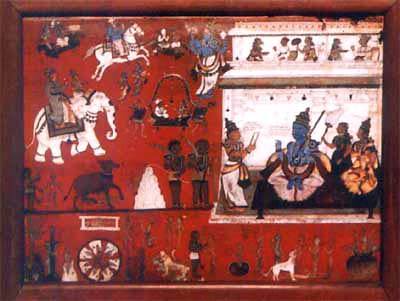
The Mahabharata includes an intriguing episode titled “Questions of Yaksha” (Yaksha Prashna). During their exile in the forest, the Pandavas come across a pond guarded by Yaksha, the spirit of the water. To drink from it, they must answer his questions. One by one, the brothers ignore his warning, drink the water, and fall dead. At last, it is the turn of the eldest brother, Yudhisthira, who chooses instead to engage with Yaksha.
Yaksha: O Yudhisthira! What is the greatest wonder of all?
Yudhisthira: Thousands die every day, yet we still live as though we would live forever.
Yaksha is satisfied with this answer. In return, Yudhisthira not only saves his own life but also restores his brothers to life.
Death remains the final taboo in ordinary conversation. We rarely speak about it, even when it is at our very doorstep. We act as if we ourselves will never die, and as if our loved ones are somehow exempt as well. In modern times, those nearing the end of life often suffer because there is so little honest conversation about dying. They miss the chance to say their goodbyes and to have the final, needed conversations that bring closure. Urged on by the possibilities of modern medicine, we keep trying to push death back at all costs. It is no surprise, then, that today most people die in ICUs—alone.
The Departure
Pre-death rituals are now almost unheard of. Once, they were an important rite of passage—a sacrament celebrating our freedom from the mortal coil.
Today, most people die in the Grihastha Ashram, the householder the householder stage, living with their families. The traditional transitions into Vanaprastha (forest retreat) and Sannyasa (renunciation) have largely disappeared. Few now spend their final days in contemplation and prayer. Instead, we cling to life, to our relationships, and to our material wealth.
Yet some still choose a different path. In their last days, they go to holy places like Varanasi or move to a hospice, where they spend their time listening to sacred scriptures or chanting the name of the Lord.
This raises a deeper question: Can we offer any healing to our deceased loved ones? Is there anything more we can do than pray and perform elaborate ceremonies?
Yes, we can.
The dead reveal much. When contacted, they share a perspective only a disembodied soul can have. They guide those left behind, helping them grow and heal. In many regression sessions, people see their grandparents appearing as guides. Many of the departed remain in touch through dreams; we often hear from people who repeatedly dream of their deceased parents, loved ones, and pets, who often become family members.
In truth, we never really die. We merely shed the physical body. We retain our personality, our temperament, and, most importantly, our unfinished karma and life lessons.
Helping Souls Crossover into the Light
Many people come to us seeking reassurance that their loved ones have crossed over safely and are at peace. They also often ask for healings, helping their loved ones continue their soul’s journey with lighter karmic baggage and, in turn, experience less suffering.

Healing can support those who are suffering from painful conditions in their final stages of life (Read: Healing for the Terminally ill), as well as those who have passed through sudden or unnatural deaths. Through this work, we help relieve the soul from heaviness, negative emotions, trauma, and sadness accumulated in this lifetime, easing its passage into the realm of Light.
Karmic Healing may also be offered to lessen karmic baggage, allowing future lifetimes to unfold with greater ease and balance.
At times, a family member may have a disturbing dream involving a deceased loved one. This can be a sign that the soul has not fully crossed over—often because of sudden or accidental death, unresolved emotions, or strong attachment to loved ones left behind. For instance, a young mother who dies unexpectedly may remain closely bound to the earthly plane out of worry for her two orphaned children. In such situations, healing helps the soul find peace and complete its transition into the Light, also the family members start to recover from grief.
Fee: Rs 9000
Contact us: +919594280000, +919810206293
Write to us at: innerjourneys11@gmail.com (info@innerjourneys.life)
Step-by-step Guide
- Please share the following details: Full name, age, and cause of death.
- Two photographs of the deceased — one from later in life and one from younger years. The photographs should be clear, taken in good light, with the eyes clearly visible. Preferably without spectacles, or ensure there is no reflection on the glasses. Avoid sunglasses or shadows over the face.
- Provide a brief biography, including significant childhood events, important memories, and any trauma involving parents, siblings, or later life experiences, and disabilities. Mention both physical and emotional trauma so we understand what specifically needs to be released.
- List all major life challenges they faced — related to health, relationships, career, finances, or personal struggles. Please include any unresolved emotional, financial, or relationship conflicts, as well as any injustice or hurt they may have carried. If possible, share photographs of individuals with whom closure was not achieved. You may also send photographs of children and significant others.
- You may share this information as a voice note (via WhatsApp, etc.) or email it to innerjourneys11@gmail.com.
- Once we receive the details, we will conduct an initial Reading and inform you of the total fee.
- Payment can be made via Google Pay, UPI, Paytm, or bank transfer. Let us know your preference, and we will share the relevant details.
- If you are outside India, you may use Xoom (via PayPal), Wise (formerly TransferWise), Remitly, Western Union, or any reliable transfer service that credits directly to our bank account. Many of our US and EU clients prefer Xoom or Wise for faster processing. You may use any service you are comfortable with. Transfer fees, if applicable, are to be borne by the client. Please ensure the transaction is completed successfully from your end. Use an online currency converter (for example, INR to USD) to calculate the exact amount at the time of payment.
- An advance payment is required to confirm the booking. Once payment is received, we will schedule the next available date. There is usually a waiting period of 1–2 weeks, so we request your patience.
- This is distance healing; therefore, you will not need to be present during the process, either online or in person. You may, however, offer a forgiveness prayer on behalf of your loved one, or chant a Shanti Mantra or any prayer for peace.
- If any guidance is received during the healing, we will share it with you.
Additional Resources:
Recommended Reading:
- Bhagavad Gita
- The Tibetan Book of the Death
- The Dhammapad
- The Kathopanishad
- On Grief and Grieving by Elizabeth Kubler-Ross
 Inner Journeys