
Post-Traumatic Stress Disorder (PTSD) and Complex PTSD (C-PTSD) are anxiety disorders that develop in response to traumatic events. While PTSD typically results from a single traumatic event (e.g., war, accident), C-PTSD arises from chronic, long-term trauma, often related to abuse or neglect. Both conditions are associated with hyperarousal, emotional dysregulation, flashbacks, and intrusive memories, leading to heightened anxiety and impaired functioning.
Post-Traumatic Stress Disorder (PTSD): A mental health condition triggered by a terrifying event, either experienced directly or witnessed. Symptoms may include flashbacks, nightmares, severe anxiety, and intrusive thoughts about the trauma.
• Complex PTSD (C-PTSD): A chronic condition often resulting from prolonged exposure to trauma (e.g., childhood abuse, neglect, or domestic violence). Unlike PTSD, C-PTSD typically involves emotional dysregulation, persistent negative self-beliefs, difficulty maintaining relationships, and dissociation.
Hypnotherapy is increasingly recognized as a valuable therapeutic tool for trauma-related disorders. Research shows that hypnosis reduces anxiety, promotes emotional regulation, and aids in processing traumatic memories by accessing subconscious patterns and facilitating healing. Unlike talk therapy, hypnotherapy works directly with the subconscious mind, where trauma is often stored and repressed, providing a pathway for deeper resolution.
Causes of PTSD and C-PTSD
1. PTSD Causes: Severe accidents or injuries, War or combat exposure, Sexual or physical assault, Natural disasters (earthquakes, floods) and Medical trauma, such as near-death experiences
2. C-PTSD Causes: Childhood emotional or physical abuse, Chronic neglect or emotional invalidation, Prolonged exposure to domestic violence and Long-term captivity or exploitation
Did you grow up in a household where there was aggression, constant fights, depression, poverty, mental illness, addiction, absence, death, neglect, scarcity? Narsicisstic abuse like diminishing, Gaslighting, humiliation, manipulation, bullying, ridicule. Physical, mental or sexual abuse or excessive control in the name of discipline?
What is your ACE score? Click here
Have you experienced Childhood Sexual abuse, or Incest?
Are you a high functioning individual but underneath your body and mind are regularly tell you to address the emotional pain and suffering you have buried long ago. Listen.
Know more about Childhood Sexual Abuse & Incest Recovery: Read here
Have You Taken Your ACE score?
According to the Adverse Childhood Experiences — ACE — study, the rougher your childhood, the higher your score is likely to be and the higher your risk for various health problems later. More here (CDC)
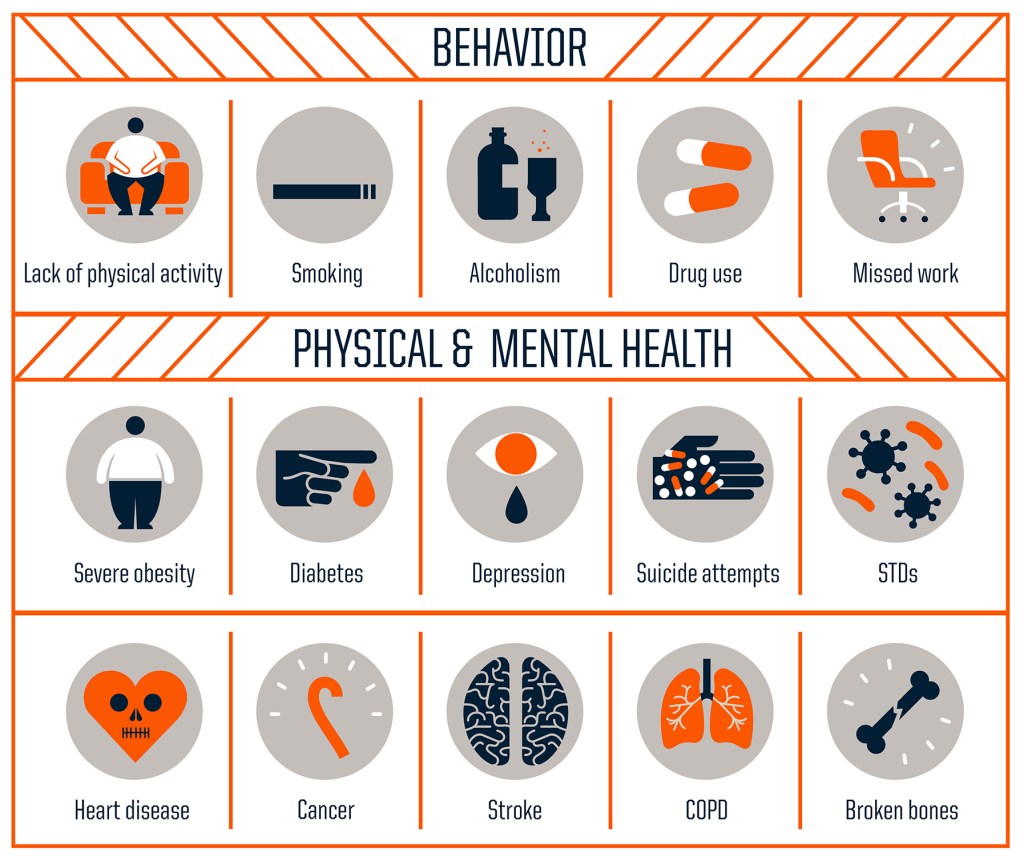
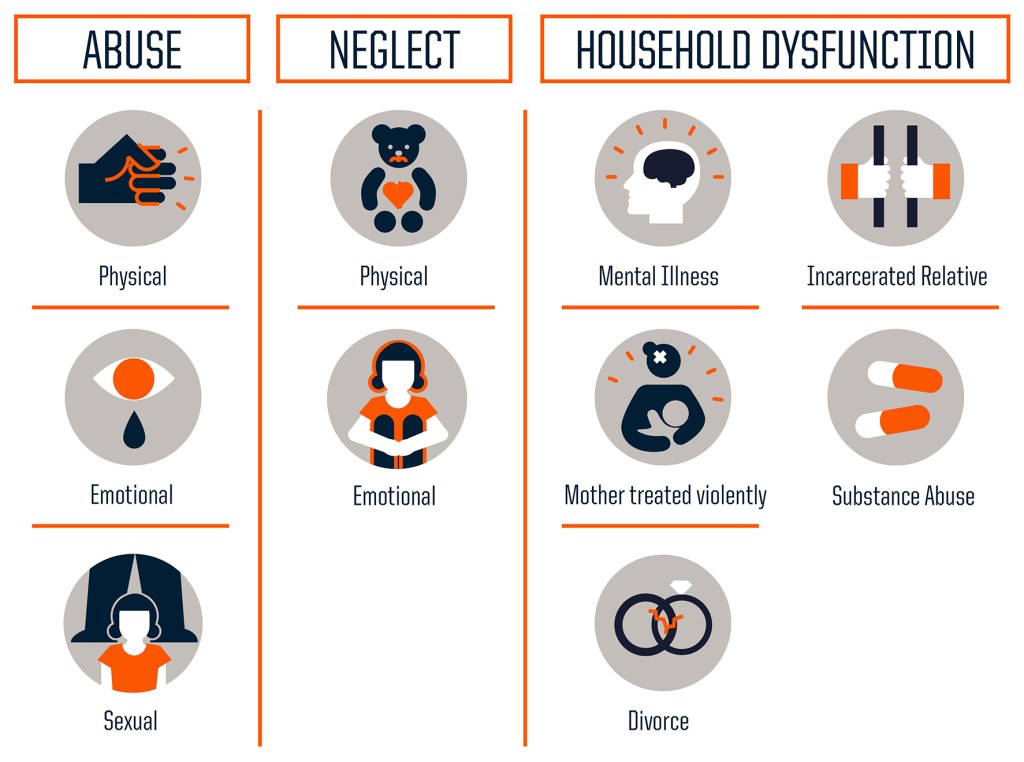
(Source: Centers for Disease Control and Prevention Credit: Robert Wood Johnson Foundation)
Take the following ACE (Adverse Childhood Experiences) Quiz: Click here
If left unhealed, the trauma can travel to the next generation through a process called Transgenerational epigenetic inheritance, in Healing it is also known as Transgenerational Trauma.
Do you have one or more of following PTSD or C-PTSD symptoms?
Physical symptoms:
Anxiety, Panic Attacks, Headache, Sleep disorders, Digestive issues, Skin and Bones issues, Blood disorders, Sinus and Respiratory issues, Chronic pain or Auto immune illnesses.
Mental Symptoms :
Mental Fog (Brain Fog), Indecisive. Feeling fixated, even Obsessive. Depression, suicidal, lack of creativity, enthusiasm, Partially feeling lost and confused, – identify crisis – over identification with one part of life job/ career, profession or a relationship,
Direction less, inability to make choice or clear and firm choices,Lack of vision or holistic and balanced vision of life.
Behavioural Symptoms:
Emotional dysregulation, Anger, rage. Shame, Guilt. Feeling Unworthy, Social anxiety, Need for approval, Fawning- People pleaser, Overthinking, Perfectionist, Workaholic, Emotional perfectionist, Too logical or numb, Self sabotaging, Victim mindset, Self- sacrificing, Co-dependent Relationships. Addictions, Sell out, Clown (Facade), Peter Pan – incomplete childhood development stage, Ungrounded – Flaky, illusions of Grandeur, Too New agey, Repeated triggers in intimate relationship or feelings of shame, guilt or failure about the trauma.
Irrational or Unhealthy beliefs or fears, Negative Self belief, Weak Boundaries, unable to express No, easy to bully, manipulate emotional and intellectually, Unable to Be who you really want to be at the moment – inauthentic and much more.
C-PTSD has its origin in our traumatic close relationships, family or caregivers and is far more complex than PTSD. This is because C-PTSD does not originate from a single episode or a few episodes, it instead involves long-term exposure to traumatic events or abusive behaviour through years of neglect, chronic criticism, ridicule, minimizing, rationalization, breadcrumbing, manipulation and abuse be it physical, verbal, financial, and yes emotional or sexual, including incest.
This list is by no means exhaustive or indicative of PTSD ( Post-traumatic stress disorder) or C-PTSD (Complex post-traumatic stress disorder), consult a medical health professional before self-diagnosing.
Hypnotherapy Techniques for PTSD and C-PTSD Management
1. Trauma Reprocessing with Hypnotic Age Regression: Helps the client revisit traumatic memories safely, resolve unresolved emotions, and modify traumatic responses by reducing their emotional charge and processing unresolved trauma.
Scientific Research: A 2018 study by Barabasz & Barabasz showed significant PTSD symptom reduction in veterans who underwent hypnotic regression therapy.
Studies suggest that traumatic memories are often stored in fragmented forms in the subconscious mind. Hypnotic age regression helps the brain reorganize and recontextualize these fragmented memories (Brown et al., 2019). Trauma reprocessing reduces amygdala hyperactivity and improves emotional regulation (Van der Kolk, 2014).
2. Hypnotic Desensitization for Trigger Management: This is done to neutralize emotional responses to triggers that cause anxiety or flashbacks. Here, in a relaxed trance, the client is guided to visualize being exposed to mild forms of their triggers while remaining calm and detached, while reinforcing feelings of safety and control. Next, progressive relaxation techniques is used to anchor calmness to the imagined trigger. Followed by Integrated Eye Movement Therapy and Kinetic Shift.
Scientific Research: Research demonstrates that systematic desensitization through hypnosis helps rewire the brain to reduce hyperarousal in response to trauma-related stimuli (Foa & Kozak, 1986). A study by Abramowitz et al. (2018) found that exposure-based hypnotherapy helped clients with PTSD diminish the emotional charge of traumatic triggers over time.
3. Parts Therapy for Fragmented Selves: Resolve inner conflict and integrate fragmented parts (dissociated parts) of the Self, created by repeated trauma. In a hypnotic state, guide the client to communicate with different parts of themselves (e.g., the wounded inner child, the protector part). A dialogue is facilitated between conflicting parts, fostering understanding, compassion, and integration. This encourages these parts to work toward the client’s well-being and integrates these fragmented parts into the adult personality.
Scientific Research: Parts therapy aligns with concepts from Internal Family Systems (IFS), where different parts of the self can be integrated through therapeutic dialogue.
Hypnosis enables faster access to these internal parts, facilitating emotional healing and reducing dissociation (Rossi, 2002).
4. Anchoring Techniques for Emotional Regulation: Anchoring creates associations between physical actions and calm emotions. This is especially useful during flashbacks or emotional triggers.
Kirsch (2020) found anchoring in hypnotherapy to be effective in reducing panic attacks and emotional dysregulation in PTSD clients.
5. Post-Hypnotic Suggestions to Reduce Anxiety and Flashbacks: Reinforce calm responses to anxiety-inducing situations after the session, and anchors for calmness are created.
Ego-Strengthening Hypnosis for Emotional Stability: Use affirmations and visualizations during hypnosis to strengthen a sense of self-worth and control, and build resilience, self-confidence, and emotional stability in clients with C-PTSD. Research shows that ego-strengthening interventions improve emotional stability and reduce symptoms of anxiety and PTSD (Alladin, 2016).
Neuroimaging studies reveal that ego-strengthening hypnosis enhances prefrontal cortex activity, which regulates emotional responses (Spiegel et al., 2016). Post-hypnotic suggestions engage neuroplasticity, rewiring the brain to form new associations between stimuli and emotional responses (Spiegel, 2013).
Studies show that anchoring techniques increase emotional regulation by shifting focus away from anxiety triggers (Yapko, 2012).
6. Self-Hypnosis for Long-Term Management: Finally, each client is taught self-hypnosis techniques to manage anxiety and flashbacks independently. They can enter a self-hypnotic state when they experience anxiety or emotional overwhelm.
Self-hypnosis enhances treatment outcomes by increasing self-efficacy and emotional control (Kohen & Kaiser, 2014). Long-term practice has been shown to reduce the frequency and intensity of flashbacks (Alladin, 2016).
7. Cognitive Behavioral Hypnotherapy (CBH) for PTSD and C-PTSD: Combines cognitive restructuring with hypnosis to change irrational beliefs and negative thought patterns associated with trauma.
Alladin (2016) found CBH highly effective in treating PTSD-related anxiety by altering cognitive distortions.
8. Future Pacing for Emotional Stability and Safety: Helps clients visualize a positive future where they remain in control of their emotional responses, even when confronted with reminders of trauma.
Case Studies: Hypnotherapy for PTSD and C-PTSD
1. Case Study 1: Combat-Related PTSD: A 35-year-old military veteran presented with combat-related PTSD, experiencing flashbacks, nightmares, and social withdrawal.
The therapist used age regression and desensitization techniques under hypnosis to revisit traumatic memories and reduce their emotional intensity.
After 8 sessions, the client reported a significant reduction in flashbacks and improved emotional regulation. He was able to attend social events without anxiety. (Ref: Abramowitz et al. – 2018).
2. Case Study 2: C-PTSD from Childhood Abuse: A 40-year-old woman with C-PTSD resulting from childhood emotional and physical abuse presented with severe anxiety, emotional numbness, and flashbacks.
The therapist applied Inner Child Healing, parts therapy and ego-strengthening hypnosis to integrate fragmented aspects of her personality and boost emotional resilience.
Over 12 sessions, the client reported improved emotional connection and reduced dissociation. She experienced fewer anxiety episodes and began building healthier relationships. (Ref: Rossi, 2002).
3. Case Study 3: PTSD Following a Car Accident: A 28-year-old woman developed PTSD after a near-fatal car accident, experiencing panic attacks whenever she drove.
The therapist used hypnotic desensitization to gradually expose her to imagined driving scenarios while remaining calm. Post-hypnotic suggestions were also used to reinforce relaxation techniques.
After 6 sessions, the client was able to drive short distances without experiencing panic. After 10 sessions, she resumed normal driving activities with confidence. (Ref: Foa & Kozak, 1986).
Scientific Research and Evidence
1. Kirsch, I. (2020): Studies on anchoring and emotional regulation in PTSD patients confirm improved emotional control and reduction in panic symptoms through hypnotherapy.
2. Barabasz & Barabasz (2018): Found that hypnotic regression significantly reduced PTSD symptoms in military veterans.
3. Alladin, A. (2016): Demonstrated that CBH effectively restructures negative thought patterns associated with trauma, resulting in better emotional regulation.
4. Watkins & Barabasz (2019): Highlighted the efficacy of ego-state therapy in managing dissociative symptoms and emotional instability in C-PTSD clients.
Case Study Example: Reprocessing Trauma in C-PTSD Client: A 35-year-old woman with C-PTSD caused by childhood neglect and abuse. Symptoms: Emotional numbness, chronic anxiety, dissociation, and negative self-beliefs.
Treatment: Progressive relaxation and rapport building. This was followed by Regression to childhood events and ego-state therapy to reintegrate dissociated parts. Anchoring techniques and CBH to manage emotional triggers and alter cognitive distortions. The client reported significant reductions in anxiety and dissociation, improved self-worth, and better emotional regulation.
Hypnotherapy offers highly effective techniques for managing PTSD and C-PTSD. Techniques like regression therapy, Inner Child Healing, Somatic Release Therapy, Parts therapy, CBH, emotional anchoring, and future pacing provide trauma survivors with practical tools to reprocess memories, regulate emotions, and rebuild their lives. With a growing body of scientific evidence and case studies supporting its efficacy, hypnotherapy continues to emerge as a powerful intervention for trauma recovery.
Start your Healing Journey today!
Facilitators: Abhishek Joshi & Priyanka Shukla
Check out their profile here:
Session duration: 1 – 1 1/2 hours,
Online over Zoom
or
at our centre in Sector 57, Gurgaon.
Fee: Rs 7000 INR per session
Contact: Abhishek Joshi: +91 981020 6293, Priyanka Shukla: +91 9594280000 (11 am – 7 pm IST)
or share your problem with us in detail at info@innerjourneys.life/ innerjourneys11@gmail.com
What’s next?
Inner Child Healing: Further on, to empower your Emotional Self, or the Inner Child from debilitating early life experiences and reprogramming deep-seated subconscious behavioral patterns, go for Inner Child Healing. Read here
Parts Therapy for inner conflict resolution: When you feel there are two conflicting sub personalities in you, which are fighting with each other, or sabotaging each other. Read here
Shadow Work, to understand and heal, how your dark side or our wounded side keeps running your life, and you keep repeating patterns, meeting same kind of people and situations in life. Read here
Past Life Regression: What if the dysfunctional patterns in your unconscious mind and karmic life blocks are coming from another lifetime? Lifetimes of Trauma, Wars, Accidents and tragedies, stored in the Unconscious Mind, just as current life traumas are stored in the Subconscious. Imprints and Triggers we are carrying forward from unhealed past, just as fear of flying, phobias like fear of darkness, heights or closed spaces, are very common and often find relief through Past life Regression Therapy or simply PLR. Read here.
Golden rules for Long term recovery
- Slow down. Avoid multi-tasking and over achieving. In the long run you will achieve more this way. Nothing is as important as it seems, so relax. Allow solutions to emerge.
- Overthinking, is not a good idea, if you are prone to worrying, procrastination or overplanning. Living one day a time is also fine.
- Most of all, never rush yourself. Keep ample time for each task at hand. Have realistic goals. If you are always stuck in time crunch you are over burdened or over scheduled. Be easy with yourself. Retire your inner hardtask master, your inner Critical self.
Workaholism is a stepping stone to deteriorating our mental and physical health.
Just as you are not your thoughts. You are also not your emotions, which are energy in motion(e-motion) in the first place, allow them to pass, let go. Breathe out!
Mindfulness meditation or MBSR can be an asset when you want to develop resources for a better functional life.
Exercise and Sports: Start a regular exercise routine at least 3-4 times a week. It can be a slow walk as well and build up from there. Over time, you will start feeling the difference as happy hormones like dopamine build up in your body. Plus, engage in fun group activities like Yoga, Zumba, Cycling, and pilates. Make sure you do whatever you enjoy because that is what will help you sustain the activity for a long time to see viable differences. Physical training like weight training and cardiovascular exercises will regularly de-stress you and build muscle strength and stamina. Progressive stamina increase and small wins in your exercise routine will help improve self-belief and confidence. This, in turn, will help you handle the stresses of daily life better and remain self-motivated. There is nothing like being your own best champion. Physical fitness improves mental agility in many ways.
Learn and Practice self-soothing techniques daily, and build on them so you can use them when you really need them. Simple mindful breathing, Counting 1 to 10 slowly is excellent or reverse counting (Pattern Interrupt). Then, Body scan and hugging oneself are great tools to somatically access and release anxious energy. Hypnotherapy would teach you some quick techniques. (We have many relaxation meditations on our YouTube channel; try some)
Let go of micro managing and yes perfectionism. Things have a way of working out. You have really nothing to prove.
Trust your instincts, your intuition. If something feels like a bad idea, it usually is. Red flags🚩 are called so for a reason. Listen.
Choose Peace, over being right. Righteous anger, and irritation is a big trap, avoid by all means, it is not worth it.
HALT: As they say in AA: During recovery..Never Forget the Danger of HALT. So never stay Hungry, Angry, Lonely, Tired, we can one more Sad for long. Do something about it. Talk to a friend or mentor. Learn tools to regulate your lifestyle and emotions. As they can cause relapse.
Learn to ask for help, you are not as alone if you do so.
If it gets too much, remember the Serenity Prayer: “Grant me the serenity to accept the things I cannot change, courage to change the things I can, and the wisdom to know the difference, living one day at a time; enjoying one moment at a time; taking this world as it is and not as I would have it..”
Let go and Let God. If you allow, there is a Higher power, which can help us.
Take small breaks through your working day. Micro breaks from 30 secs to 2 min. Count 10 slow and deep breaths. Start again.
Free Cover Photo by RDNE Stock project on Pexels.com
 Inner Journeys