“In every adult, there lurks a child – an eternal child, something that is becoming, is never completed and calls for unceasing care, attention and education. That is the part of the human personality which waits to develop and become whole.”
-Carl Jung: CW 17 The Development of the Unconscious
Inner Child Healing is a therapeutic approach rooted in the belief that unresolved childhood experiences and emotional wounds can significantly impact one’s thoughts, behaviors, and emotions in adulthood. Although it has gained popularity in modern psychology and self-help practices, the concept of healing the “inner child” has evolved from various therapeutic traditions, including psychoanalysis, humanistic psychology, Jungian psychology, and trauma therapy. (main page)

Inner Child Healing seeks to reconnect the adult self with these hidden parts to process old wounds, nurture the inner child, and build healthier thought patterns. Thus, it is effectively being used to overcome dysfunctional childhood patterns and baggage of emotional wounds, failures, fears, trauma and abuse – physical, emotional or sexual.
Kinds of Childhood Trauma: If you have experienced dysfunctional parenting or chaotic family life – and experienced parental manipulation via their victimhood stories or narcissism, control (dominance), aggression or passive aggression, negative self-beliefs, dismissive or critical behaviour, neglect, abuse or abandonment (early loss of a parent or sibling) – Inner Child Healing could be way forward towards healing, peace and fulfilling relationships. Since all our childhood memories are stored deep in the Subconscious Mind, this makes hypnosis a perfect tool to access, heal and release, which goes hand in hand with traditional talk therapy.
How we were treated as children, we end up treating others the same way — often unknowingly. Intellectualisation, numbing out, addictions, and workaholism are coping mechanisms that never let us fully heal or lead a healthy life. Only when we are ready to feel we are ready to heal. The wounds we don’t heal in ourselves, we end up passing them on to the next generation. Worse still, we spend the rest of our days playing the same shadow games our parents did to gain what they didn’t get in their childhood — love, care, affection, approval, power or control. Thus begins the Shadow play for our various dysfunctional parts, which show up repeatedly — at the workplace and in relationships. Why?
History of Inner Child Healing
Jungian Psychology: Archetypes and the Inner Child Concept
Carl Jung, a disciple of Freud, made significant contributions to the development of inner child healing through his theories of the archetypes and the collective unconscious.
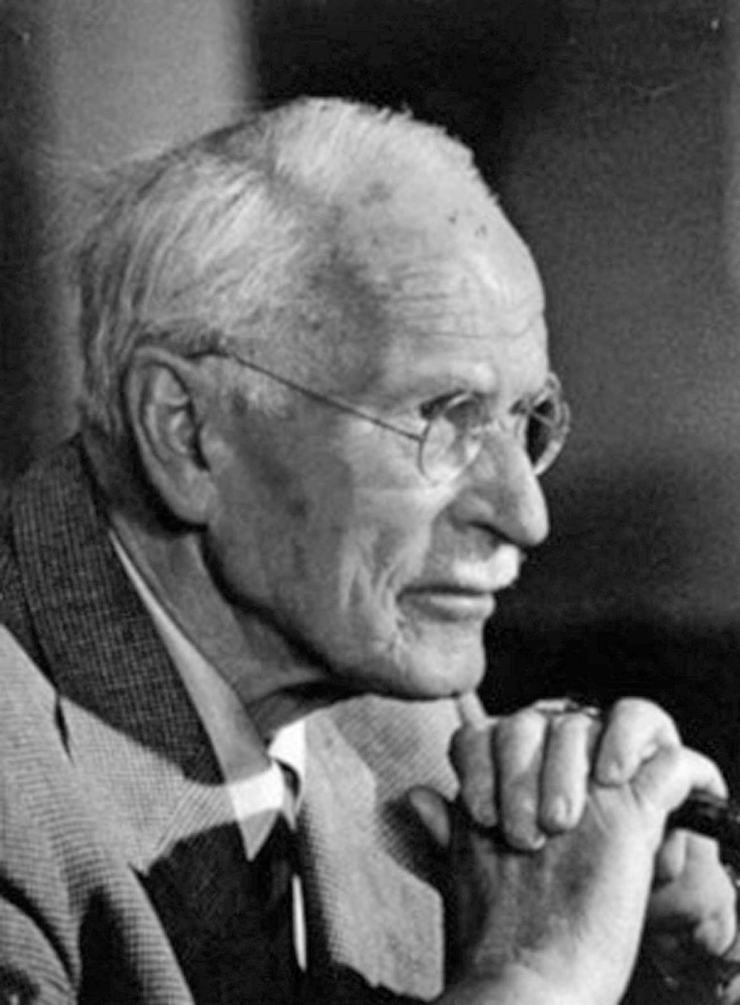
― Carl Gustav Jung
• The Child Archetype: Jung introduced the concept of the child archetype, representing innocence, playfulness, and new beginnings. However, he also recognized that wounded aspects of this archetype could manifest as insecurity, emotional pain, or immaturity in adulthood. Healing the inner child involves integrating these wounded parts into the adult self to foster wholeness.
• Integration of the Shadow Self: In Jungian psychology, the shadow refers to the unconscious parts of the psyche that one represses or denies. The inner child is often considered part of this shadow, carrying unacknowledged emotions such as shame, fear, or sadness. Jung’s emphasis on self-integration and exploring the unconscious aligns with the core goal of inner child healing: to embrace and integrate past emotional experiences.
“Everyone carries his parents around inside of him.”
― Eric Berne
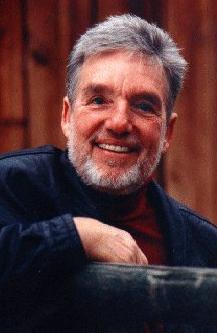
Trauma Therapy and Inner Child Work: The rise of trauma therapy in the 20th century further shaped the development of inner child healing, particularly in addressing childhood trauma and emotional neglect.
• Post-Traumatic Growth: Therapists working with trauma survivors, such as John Bradshaw in the 1980s, popularized the idea of inner child healing. Bradshaw emphasized that individuals carry unresolved childhood trauma into adulthood, which manifests as dysfunctional behaviours, emotional pain, and interpersonal difficulties. His book, Healing the Shame that Binds You (1988), introduced inner child work as a way to release toxic shame and heal emotional wounds.

― Bessel A. van der Kolk
• Somatic Healing and Trauma-Informed Practices: Modern trauma therapists, including Bessel van der Kolk (The Body Keeps the Score), recognize that trauma is not only psychological but also stored in the body. Inner child healing integrates somatic techniques to address these deeply embedded memories, providing a holistic approach to recovery.
Popularization in Self-Help Movements
In recent decades, the concept of inner child healing has become widely popular in self-help literature and spiritual practices.
• Self-Help Authors: Authors such as Louise Hay (You Can Heal Your Life) have emphasised inner child healing as a path to emotional freedom and self-love. These authors encourage readers to reconnect with their inner child, acknowledge their emotional wounds, and nurture themselves through affirmations and self-care practices.
• Spiritual and Mindfulness Practices: Inner child healing has also been integrated into spiritual and mindfulness practices, such as meditation and guided visualization. These techniques help individuals access their inner child, fostering deeper self-awareness and emotional healing.
Modern Applications of Inner Child Healing: Today, inner child healing is a well-recognized therapeutic approach used in counseling, life coaching, and trauma recovery.
• Counseling and Psychotherapy: Therapists use inner child healing techniques to help clients address emotional wounds, reparent themselves, and develop healthier relationships.
• Life Coaching and Personal Development: Many life coaches incorporate inner child healing into their programs to assist individuals in overcoming limiting beliefs and emotional blocks, allowing them to achieve their goals.
• Group Therapy and Workshops: Inner child healing workshops and group therapy sessions provide participants with a supportive environment to explore their emotional wounds and share their healing journeys.
The history and origins of inner child healing are rooted in multiple therapeutic traditions, including psychoanalysis, Jungian psychology, humanistic psychology, attachment theory, and trauma therapy. Over time, it has evolved into a powerful approach that helps individuals reconnect with their inner child, address unresolved emotional wounds, and cultivate self-love and healing. Today, inner child healing is embraced by therapists, self-help practitioners, and spiritual teachers alike, offering a pathway to personal growth, emotional freedom, and wholeness.
Understanding The Child Archetype
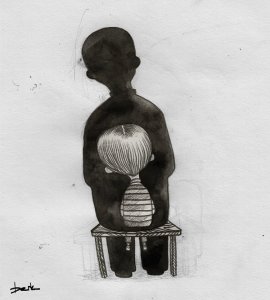
The Child is one of our four main Survival archetypes: Victim, Prostitute, and Saboteur.
Each one of us has two archetypal personalities, The Adult and the Child. The Inner Child, or our emotional self, is our childlike aspect. It brings out our child-like capacity for innocence, wonder, awe, joy, sensitivity, playfulness and creativity.
The Child is also our Emotional Self and tells us how we look at life and perceive life events. Issues of safety, survival, nurture, loyalty, and family and tribe are all rooted in the Inner Child. Often established in the Root Chakra or, in some cases, the lower three chakras. Various forms of the Child can be Wounded Child, Abandoned child, Neglected Child, Orphan Child, Dependent child, Lost child, Invisible Child, and through healing, it can mature to become the Nature Child, Magical or Wonder Child, and finally, the Divine Child – knows that he or she is, in fact, a child of God. That is the journey of evolving Child archetype in each one of us. Starting from childish behaviour in adults, tantrums, sabotage, self-destruction and sulking, and developing to childlike — innocent, creative, quick to bounce back and playfulness, regardless of age, is the hallmark of a healthy Inner child. The Wounded healer archetype also begins with the wounded child.
The primary task in developing Inner Child archetypes is finding balance in dependency and responsibility: when to take responsibility for our life situation, when to have a healthy dependency, when we can stand up to the group, and when to embrace public life and contribute to society. Or we may become over-responsible and develop co-dependent relationships, which again is a dysfunctional Inner Child on an overdrive.
The Wounded Child

The majority of so-called adults are not truly adults at all. Only older. It is the Adult Child. As they are being constantly influenced or covertly controlled by this unconscious inner child. An emotionally wounded inner child inhabits an adult body.
Growing up, the inner child is denied, neglected, shamed, Abandoned or rejected. We are told by society to “grow up,” putting childish things aside. Thus, all the positive qualities are lost. Lost childhood and lost innocence need to be grieved. Because incomplete grieving can lead to a perpetual cloud of sadness.
The Inner child is also wounded during childhood traumas and physical, emotional, mental and sexual abuse. As it holds, our accumulated childhood hurts, traumas, fears and anger. The Wounded child may cling to victimhood, righteous anger, refuse to forgive or take responsibility, find it easy to blame the past, parents, and other parent-like figures it has attracted in intimate relationships, lash out regularly, bottle up and explode, or go downward in self-pity and delusional thinking about future.
Wounded, unhealed inner child can show up as destructive behaviour:
- Acting Out: Explosion: Showing the same behaviour as the abuser (or parent), be it physical, emotional or sexual. A lack of unconditional love can be damaging for a child who is solely dependent on their parents or primary caregivers for love, affection and protection. On top of that manipulation, using love as currency, rejection, fear, intimidation, comparison or shame as tools of control also constitutes emotional abuse. This can lead, for example, to people-pleasing behaviour and eventually Co-dependent relationships with Narcissists. This itself has been the subject of many, many books.
If a child has aggressive parents, he becomes aggressive to his siblings, peers and later to his colleagues, spouse, and children. Similarly, with controlling or over-disciplining parents or emotionally absent parents, he keeps repeating the learnt behaviour, thus perpetuating the cycle of abuse.
- Acting in: Implosion: The Child, now a grown-up Adult, has forgotten the abusive behaviour he or she experienced or simply repressed it. But treats himself as his parents or abusers did. Children of Critical parents, or him whose love was only based on performance, never gave unconditional love, they become workaholics and super achievers but still have low self-esteem and eventually burn out!
This would be cases of over-ambitious or workaholic folks with the inability to sustain relationships or have healthy ones. People are trapped in Self-sabotage just to get back at their parents and self-defeating behaviour and passive hostility. Eventually, it shows up as severe self-destructive symptoms: violent aggression and, sometimes, evil deeds and addictions.
- Destructive behaviour in adults often bears the impetuous, impulsive quality of childish petulance (the Brat) or narcissistic temper tantrums. Or an infantile neediness, dependency, and dread of abandonment. Addictions and addictive or obsessive behaviour in relationships
- Irresponsibility and angry refusal to be an adult: the “Peter Pan syndrome,” or what Jungians refer to as a puer or puella complex. The archetypal Jungian concept of the puer aeternus (male) or (female) puella aeterna -the eternal child.
Why is Inner Child Healing so effective in handling triggers?

While talk therapy helps in catharsis, emotional release thus achieved is not as effective because it can seldom reach beyond the conscious mind. We might understand our past and our dysfunctional behaviours, but changing those behaviour patterns becomes tedious.
Meanwhile, the core trauma memories, which are the actual origin of our triggers, lie hidden deep in the subconscious mind. Another problem is that the subconscious is not logical or rational. So despite all our attempts to behave logically, as wise adults in moments of crisis, we often lose it and afterwards end up feeling foolish, powerless, guilty or shameful. Because we suddenly start behaving like the hurt child — wounded child.
To understand this further, let’s take an example of the most common control issues. A very controlled childhood, directly using the threat of abuse or indirectly using passive control, itself is the irrational part of our mind. That is why, knowing our triggers or dysfunctional behaviour patterns, we seldom can be mindful enough during the crucial moment. Often, in that state of crisis, we overreact. Or behave like the child who first experienced the trauma.
Inner Child Healing is done through guided meditation, we visit key childhood memories in the Subconscious mind that formed your personality and its problems.
In age regression, we release the stored hurt and emotions and reprogram dysfunctional or harmful beliefs. Thus, we unlock the origin story of such behavioural patterns and begin to heal.
Freedom from the Past is Possible!
Freeing ourselves from our past traumas through emotional and inner child healing, we start healing our negative interpretations of childhood traumas or maladjustments due to them, like survival mechanisms, defensiveness, and aggressive traits no longer needed.
Gradually, we begin to acknowledge, accept and thus heal our dark impulses, compulsive habits, fears, self-destructive and self-sabotaging shadow traits and self-beliefs, and thus we step into our light.
Isn’t it acceptance we are all looking for? And an expression of unconditional love. When we begin to lovingly embrace all that we are, we merge all our fragments into ourselves. Self-acceptance brings about this change and grows into self-love. A love that shows up in loving choices we make for ourselves.
This is the journey to wholeness, to complete integration or yoga.
Without confronting our shadow side, we remain in the illusion that we only have light-filled traits and no shadow traits. Only to be reminded of them again and again in the people, events and traits we encounter and get triggered by repeatedly. Our irritations and repeated hurts are the wounds life is reminding us to heal.
Only then do we get to experience inner freedom and also our true light. Peace and joy are clear by-products. We are all here to awaken. Everything in our life is designed to awaken us.
 Inner Journeys