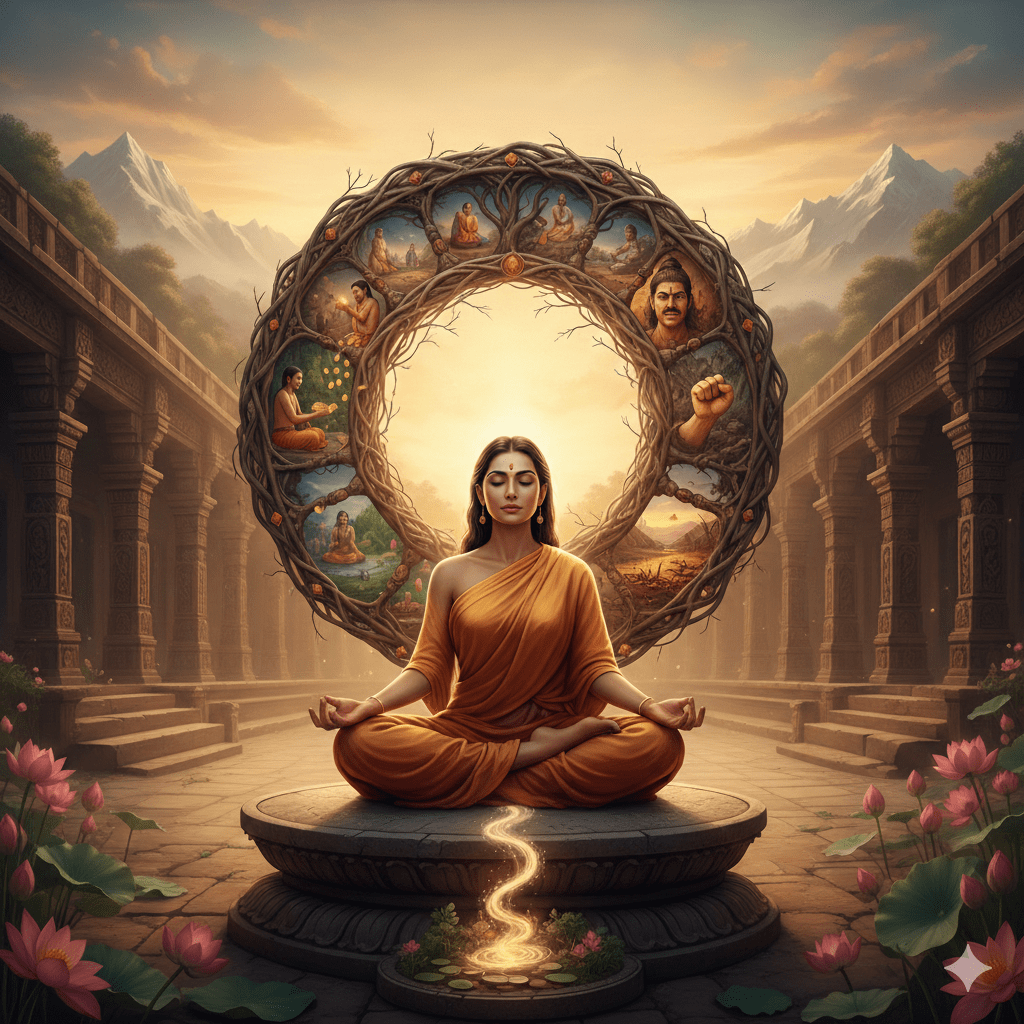
“As a man himself sows, so he himself reaps; no man inherits the good or evil act of another man. The fruit is of the same quality as the action.”
— Mahabharata, xii.291.22
We all want to heal.
These days, we want it fast—if not instantly.
I am often struck by how many people approach healing as though it were a miracle cure, expecting a 100% guarantee, instant results, and complete transformation from a single session.
Yet when these same people visit an allopathic doctor, they readily accept that there are limits. Doctors diagnose, prescribe medication, and offer treatment, but each person responds differently. Even in the best hospitals, out of ten people receiving the same treatment, a few may not fully recover. No genuine doctor can promise a 100% cure; ethically and legally, they are not allowed to.
The same is true for healers. Spiritual medicine also requires the right dosage and time. The cycles of karma and planetary influences are long, so results naturally take time to manifest. Patience is essential. Often, healing unfolds over months or even years, depending on our karmic baggage, accumulated good karma, and willingness to grow and change. Spiritual healing cannot rewrite our entire life script or remove our life lessons. Karmic healing often touches us in ways we rarely recognise or fully understand.
From our accumulated past karma, called Sanchit Karma, we select our Prarabdha Karma—the portion of our total karma we choose to work through in this lifetime, through specific lessons and experiences of suffering. On this basis, we choose not only our life script but also our horoscope and the key people who will play important roles in our journey. Our difficult yet necessary lessons and sufferings create the very framework of our life’s path and reveal what we have come here to learn.
In essence, some karma, known as Drida or Kathor Karma (literally “hard karma”), must simply be borne. We are called to endure it with patience, humility, and, if possible, grace. These kathor karmas are meant to deepen our compassion for other beings.
Ultimately, healing is not an entitlement but a privilege.
We heal when we are karmically ready. We must learn to wait. “Patient” is the term used for someone admitted to a hospital, remember?
Sometimes, the answer to our prayers is no.
Some things will never be healed; some people will succumb to their illnesses, and others will have to endure long hardships—humbly or bitterly, according to our choice. At such times, many lose faith, as though God or life owed them something. Yet blaming God is futile, because it is our own karma that is unfolding. God can only guide us toward healing.
When your time to heal arrives, you will meet the right doctor, receive the right medicine, and discover the right therapy—and they will work. Until then, you may find yourself moving from one healer, doctor, or therapist to another, without lasting results. Even the finest doctor can, at times, offer an incorrect diagnosis or treatment.
A healer, however, approaches you with a holistic vision from the very beginning. He understands that healing the spirit is far more important and enduring than simply treating the body. Healing is a journey; be willing to embark on it if you truly wish to heal.
These days, many of us assume the law of karma applies to everyone else but us. We prefer to see ourselves as inherently saintly, convinced there can’t be any bad karma in our past.
It’s time to get real. Your karma is unfolding right in front of you. Acknowledge it, accept it, and take responsibility for your healing. As you do, more of your past-life karma will surface so it can be transformed. Consciously improve your karma—shape it through your thoughts, words, and actions. –Take Charge of your Karma. Offer sewa, or selfless service, if you can. It can help you heal faster, instead of constantly moving from one healer or doctor to another. Above all, listen to your inner wisdom. It will guide you on your healing journey. Only the humble truly heal, and the innocent naturally develop faith.
The beauty of the law of karma is that redemption is possible for everyone. As the Brihadaranyaka Upanishad, one of our oldest Dharmic scriptures, says: “Truly, one becomes good through good deeds, and evil through evil deeds.” (3.2.13) By choosing better, you create better Agami Karma—your future karma.
Some simply wait, as the Universe patiently waits for them to turn inward toward their light, to grow in humility, and to generate good karma.
“We worry so much about the perfume bottle that we forget what truly matters lies within.”
-Abhishek Joshi
We have come here to heal our spirit, yet we pour most of our effort into healing the physical body, and occasionally the emotional or mental body. When you begin to heal your spirit, you win—no matter what happens outwardly. And what more powerful way to heal the spirit than sincere prayer?
Tonight, don’t forget to pray.
Miracles belong to God, and heartfelt prayer opens us to God’s benevolence.
It is God who heals; the rest of us merely facilitate the process. With this in mind, won’t you pray tonight? “Heal me, God, heal me; make me whole again…” When a vase is shattered into a thousand pieces, you could try to glue it back together piece by piece—or you could take it to the Creator and ask Him to renew it, as only He can.
Amazing grace.
-Abhishek Joshi
God Doesn’t Make Mistakes.
“I have never harmed anyone in this life, so why am I suffering?”
We hear this often. Yet most people who come to us for Karmic Healing eventually recognize that it is unresolved past karma that creates much of our present suffering—those moments when we acted impulsively, selfishly, or without wisdom. Because karmic cycles are long, they catch up with everyone sooner or later. No one is spared—saint, sage, or petty thief.
God doesn’t make mistakes. He witnesses everything and keeps the cosmic books balanced. No one truly gets away with anything, and nothing goes unrecorded. This means no one experiences meaningless suffering or a life empty of lessons. The law of karma is just, impartial, exacting and impersonal, guided by a simple principle:
“Every action has an equal and opposite reaction.”
Understanding our past karma frees us from the mindset of victimhood. Instead of asking “Why me?”, we feel inspired to improve our karma through sewa and to become kinder and more forgiving. We’ve observed that those who embrace growth tend to heal faster because they are willing to make the practical changes in their life and lifestyle that healing demands.
In essence, we have chosen this life script to evolve as a soul. Our hardships and challenges are not random; they offer us a unique opportunity for spiritual growth.
What happens when our Past Karma Ripens?
As the seeds of our negative past karma ripen, they bring suffering, just as the seeds of our positive karma bring blessings and unexpected windfalls.
This process is largely predestined, as reflected in our birth chart and astrological cycles. As a sign, whenever suffering arises, it indicates that a karma from past lifetimes—where we caused others to suffer—has ripened and is now ready for healing or karmic clearance. If we have sufficient positive karma, we can receive this healing and experience relief.
Karmic Healing or Astro-Akashic Healing are also forms of sewa (selfless service). Through it, we help heal those we once harmed, and in doing so, we benefit as well—we are healed, and so does our lives, which slowly begin to transform.
Making Sense of Life’s Unbearable Tragedies
One of the most difficult readings I am called to do is for parents who want to understand why their child is suffering—or worse, why their child passed away at a very young age, often through sudden or painful circumstances.
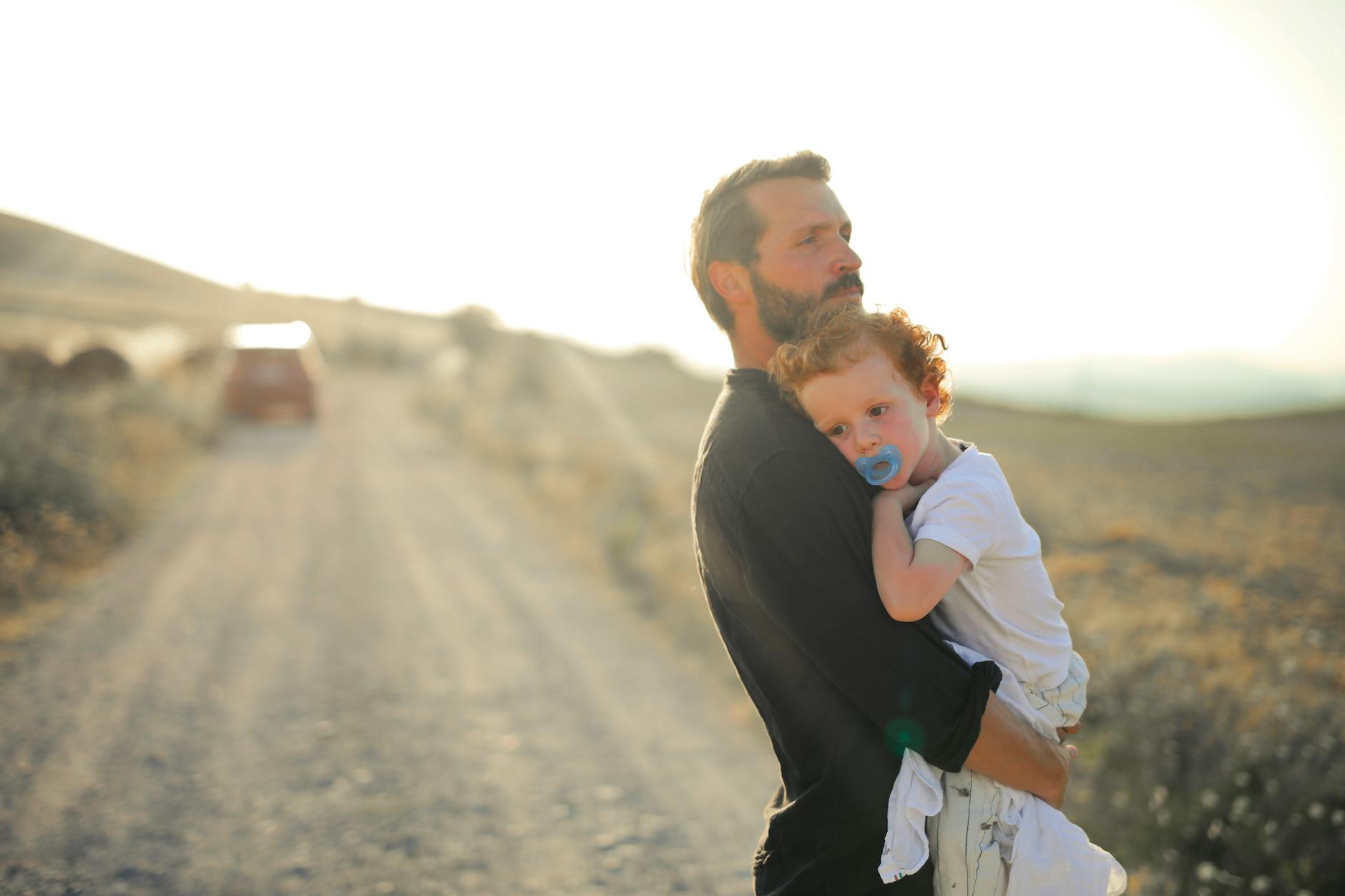
There is a uniquely heartbreaking pain in witnessing a child suffer. Yet what often feels even heavier is the absence of meaning: not being able to make sense of the tragedy. Inevitably, parents arrive at a question that takes immense courage to ask: What karma of mine am I suffering through this? Some questions arise from a place where logic cannot reach…
Over the years, through many such readings, a deeper understanding has emerged within me: existence is not random, and God does not make mistakes. What we call tragedy is often rooted in layers of karma stretching across many lifetimes.
When a child suffers, it may be linked to the child’s own karmic past. At times, it also involves the karmic field of one or both parents. In some cases, ancestral karma begins to surface, as generational patterns and unresolved imprints converge with personal karma, creating what appears to be a senseless tragedy.
It is crucial to understand that this is not about blame, but about insight and understanding.
These are not punishments, but experiences at the level of the soul—however difficult that may be to accept at a human level. This understanding does not remove the pain, but it begins to give it context. And within that context, something in us begins to shift.
Again and again, I have seen that when parents receive these insights, their grief does not disappear—but it softens. A sense of long‑sought closure begins to take shape. Where there was once only confusion and anguish, a quiet peace slowly emerges.
In that quiet space, as understanding gently replaces confusion, healing finds its way… and the soul slowly begins to make peace with what once felt impossible to accept.
If you have ever carried such questions in your heart, know that you are not alone.
What about Collective Tragedies?
Individual karma often shapes our collective experiences. In mass events, people with similar karmic patterns tend to come together.
During Covid-19, based on my conversations with Spirit Guides, I sensed a striking precision in how karmic experiences unfolded. It felt as though great care was taken to ensure that no one without the corresponding karmic patterns was drawn too deeply into the waves of infection or made to suffer beyond what they were meant to experience.
In this way, suffering appears to move in proportion to our karma—across both current and past lives. Even within large collective events, there is a kind of precision at work. Yet beyond the event itself, a deeper question arises: Do we rise to the occasion, or do we fall within it?
During Covid, we saw both possibilities manifest. Some people became more closed, fearful, or self-protective. Others opened their hearts—supporting strangers, helping those in need, and, in many ways, becoming human angels. This is where a deeper understanding of karma truly matters.
Karma is not a system of punishment, nor is it about deciding who “deserves” to suffer. Karma does not confine us; it offers us an opportunity—to rise above old patterns, respond in new ways, and grow in awareness, compassion, and inner strength.
There are also moments in life that feel almost beyond explanation:
Someone misses a flight and is spared.
Someone suddenly falls ill and avoids being in the wrong place at the wrong time.
Someone feels a quiet inner nudge and changes a decision without knowing why.
We’ve all heard such stories—someone missing the Ahmedabad flight, or another person not making it to work on 9/11 because something unexpected delayed them.
Whether we call it intuition, grace, or something beyond our understanding, life sometimes seems to intervene in ways logic cannot fully explain. Perhaps our task is not to decode every moment, but to trust the unfolding—and, more importantly, to become conscious of how we meet it.
In the end, it is not only what happens that shapes us, but who we choose to be in response.
~Navigating through Karma~
I have often spoken about the importance of Sewa, or selfless service, in healing our lives. I have seen miracles unfold when a soul dedicates itself to such service, and through it we come to witness the workings of Divine Grace, or Kripa.
When Sewa is done with complete detachment and a sense of non-doership, it becomes Nishkaam Karma.
To act as the heart guides, while releasing the desire for results or rewards, is to experience true freedom in action.
This, however, is difficult. That is why we continue to move in the cycle of birth, death, and suffering.
When we feel tired, bored, or disheartened, we can choose to perform desireless actions, guided only by the inner Krishna. Then any war can be won.
The key is to understand how the ego traps us in the sense of doership. The moment we think, “This is my good karma,” it becomes our personal karma—golden chains, as Guru Nanak says—keeping us bound to the karmic cycle so that we must experience the consequences of even our good actions.
So, do your dharma—your duty—from the heart, and then release it. Move on to the next karma, whether it is a physical deed, an emotional response, or a choice of thought.
“नेकी कर, कुएँ में डाल।”
“Do a good deed and drop it.”
But first, learn to distinguish between the desires of the soul and the impulses of the ego, in the stillness and silence of your heart. This discernment, or viveka, helps us transcend the cycle, one choice at a time.
In essence, become aware of your deep driving desires and the true intentions behind every choice. Align them with your soul as much as possible, and the rest will naturally fall into place.
Reminds me of the famous verse:
“You are what your deep, driving desire is.
As you desire, so is your deed.
As your deed is, so is your destiny.”
– Brihadaranyaka Upanishad
Additional Resources:
- Take Change of your Karma
- Karmic Healing
- Astro-Akashic Healing
- Spiritual Regression
- Pitra Dosha or Ancestral Curses
- Forgiveness
- Sewa
- Prayer
- Life Crisis and Karmic Healing
Need help or healing?
Write to us about your issues in detail: info@innerjourneys.life, so we can guide you better.
Or msg or WhatsApp: Abhishek: +919810206293, Priyanka: +919594280000.
 Inner Journeys