
Adverse Childhood Experiences (ACE)can have long-term negative impacts on health, opportunity and well-being.
ACE Score: Adverse Childhood Experiences and Their Impact
The ACE Score (Adverse Childhood Experiences Score) is a measure used to assess the extent of childhood trauma and its potential long-term impact on an individual’s mental, emotional, and physical well-being. The concept of ACEs was introduced through the Adverse Childhood Experiences (ACE) Study conducted by the Centers for Disease Control and Prevention (CDC) and Kaiser Permanente in the 1990s. This pioneering study demonstrated that adverse experiences during childhood can have profound effects on adult health outcomes.
What is the ACE Study?
The ACE Study explored the connection between childhood trauma and various health problems later in life. The researchers surveyed over 17,000 adults, asking about their exposure to different types of adverse experiences before the age of 18. These included various forms of abuse, neglect, and household dysfunction.
The findings revealed that the higher a person’s ACE score, the greater their risk for physical, mental, and emotional health issues in adulthood.
What Contributes to the ACE Score?
There are 10 categories of ACEs divided into three primary types: abuse, neglect, and household dysfunction. Each category counts as one point toward the ACE score.
1. Abuse
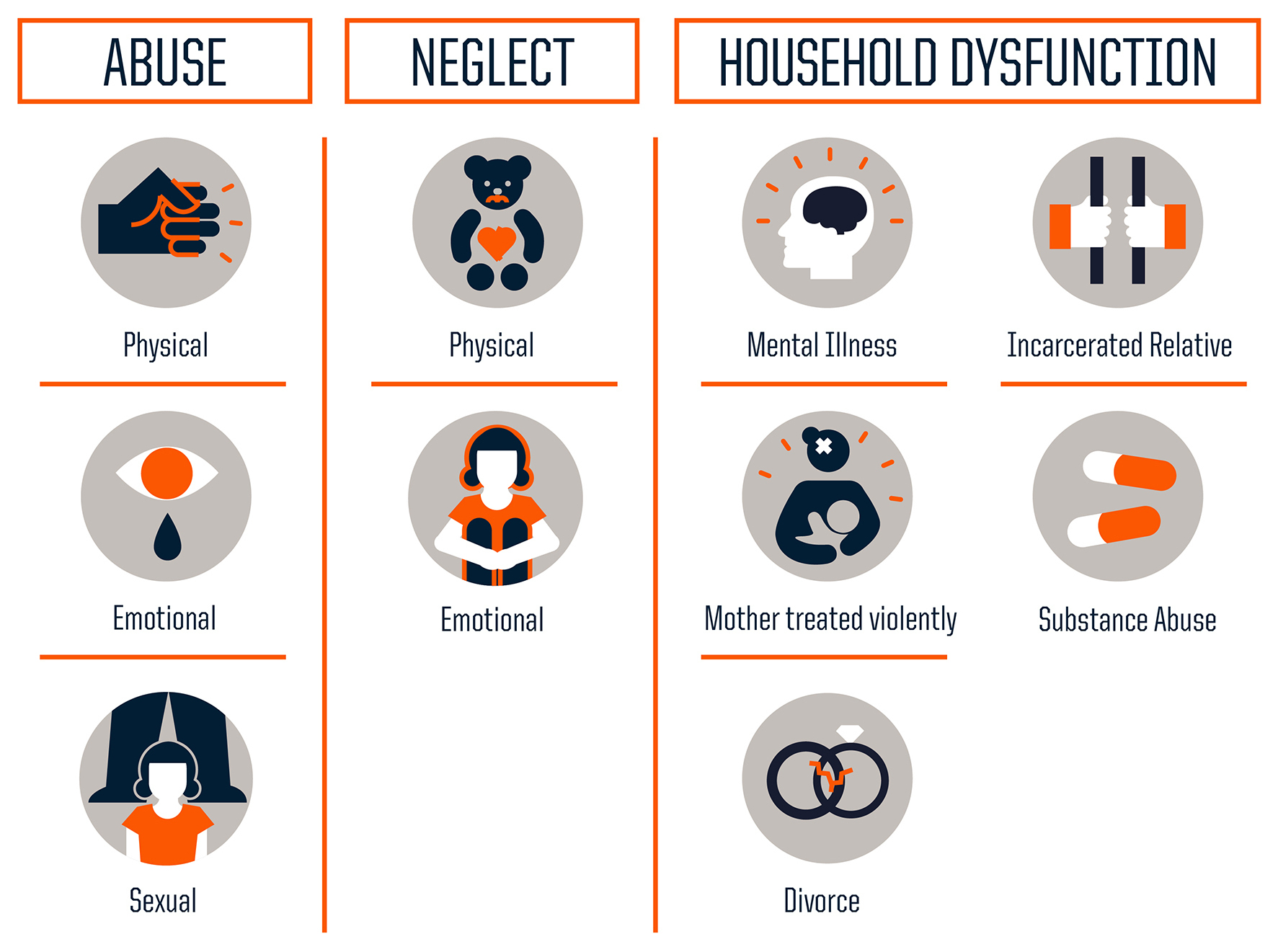
• Physical Abuse
• Emotional Abuse
• Sexual Abuse
2. Neglect
• Physical Neglect
• Emotional Neglect
3. Household Dysfunction
• Mental Illness in the household (e.g., a parent with depression or schizophrenia)
• Substance Abuse by a family member (alcohol or drug use)
• Parental Separation or Divorce
• Domestic Violence (one parent being violent toward another)
• Incarceration of a household member
Watch a TED talk on Adverse Childhood Experiences
How is the ACE Score Calculated?
The ACE score is calculated by assigning one point for each type of adverse experience encountered during childhood. A person’s total ACE score ranges from 0 to 10, with a higher score indicating a greater number of childhood adversities.
Find your ACE Score Take this Quiz: Click here.
Impact of ACEs on Health and Well-Being
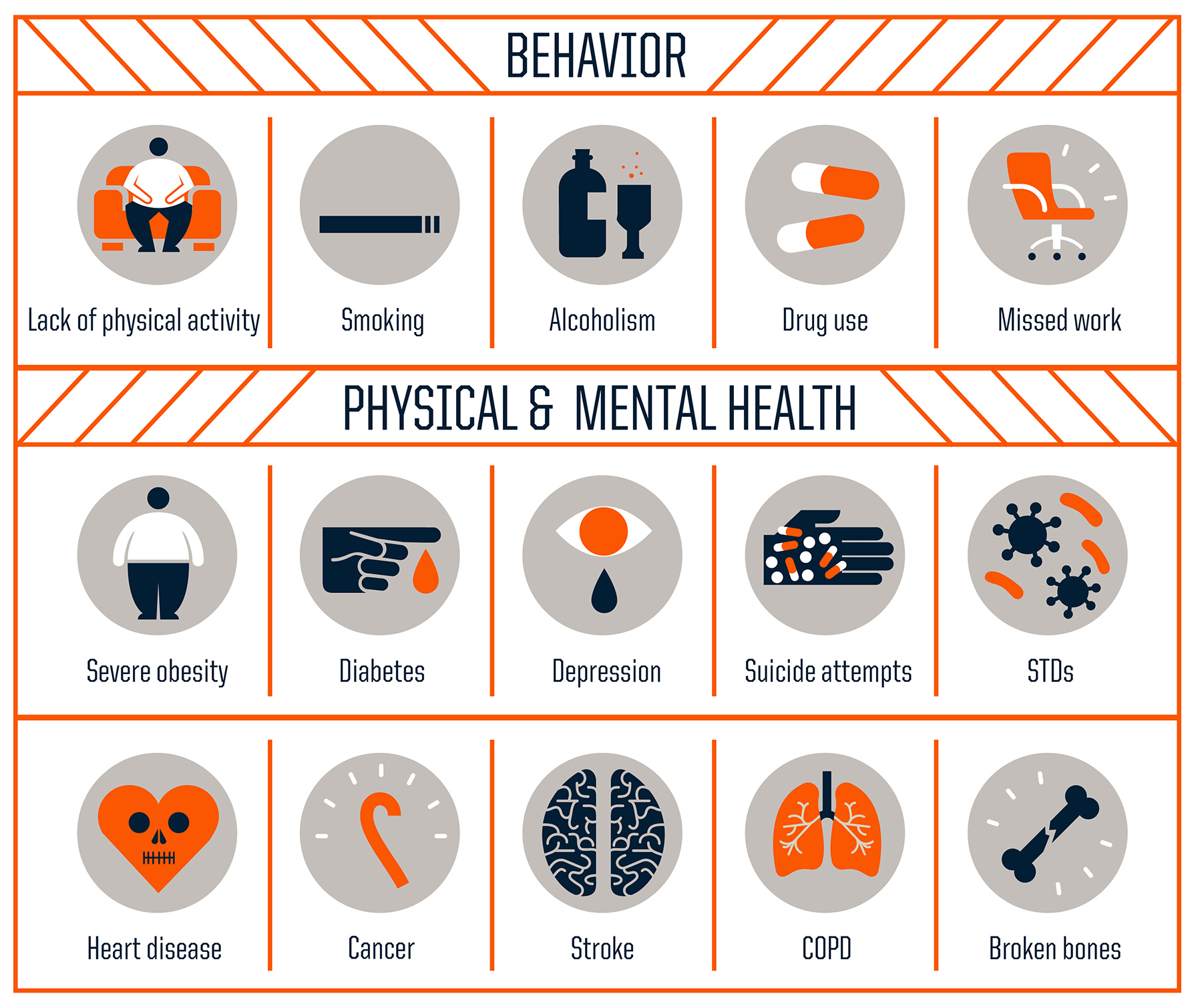
Research shows that higher ACE scores are strongly associated with a range of physical, emotional, and behavioral issues later in life.
1. Mental Health Issues
• Increased risk of anxiety, depression, and post-traumatic stress disorder (PTSD).
• Higher likelihood of substance abuse and addiction.
2. Physical Health Issues
• Increased rates of heart disease, diabetes, obesity, and autoimmune disorders.
• Higher risk of chronic pain and inflammatory conditions.
3. Behavioral Issues
• Greater likelihood of self-sabotaging behaviors such as smoking, overeating, and unsafe sexual practices.
• Increased involvement in crime, violence, or self-harm.
4. Social and Relationship Challenges
• Difficulty forming healthy relationships and establishing trust.
• Higher rates of divorce and domestic violence in adulthood.
According to the Adverse Childhood Experiences — ACE — study, the rougher your childhood, the higher your score is likely to be and the higher your risk for various health problems later.
While a high ACE score indicates a higher risk for challenges, resilience plays a crucial role in mitigating the negative effects of childhood trauma. Some protective factors that build resilience include:
• Supportive relationships with family or mentors.
• Therapeutic interventions, such as counseling or hypnotherapy.
• Community support and access to mental health services.
• Positive coping skills like mindfulness, self-care, and healthy relationships.
ACE Score and Hypnotherapy
For individuals with a high ACE score, hypnotherapy can be a powerful tool to help process and heal from childhood trauma. Here’s how it helps:
1. Accessing Subconscious Memories
Hypnosis allows individuals to safely access and reframe traumatic childhood memories stored in the subconscious mind.
2. Healing Emotional Wounds
Techniques like inner child healing through hypnotherapy provide emotional closure by addressing unmet needs and unprocessed emotions.
3. Behavioral Change and Self-Esteem Building
Hypnotherapy helps individuals reprogram negative beliefs and adopt healthier coping mechanisms.
4. Stress Reduction
Hypnosis enhances relaxation and helps individuals manage the long-term stress caused by ACEs, reducing the risk of chronic health problems.
The ACE score provides a valuable framework for understanding how childhood trauma impacts long-term health and behavior. It underscores the importance of early intervention, emotional healing, and mental health care. Hypnotherapy, with its focus on subconscious healing, offers a promising avenue for individuals seeking to address and overcome the effects of childhood adversity. While ACEs can significantly affect one’s life, fostering resilience and pursuing healing can lead to recovery, personal growth, and emotional freedom.
Start your Healing Journey today ! Know about Inner Child Healing: here
Cover image: Photo by Rebecca Zaal on Pexels.com
Graphic source: Center for Disease Control and Prevention; Credit: Robert Wood Johnson Foundation
 Inner Journeys