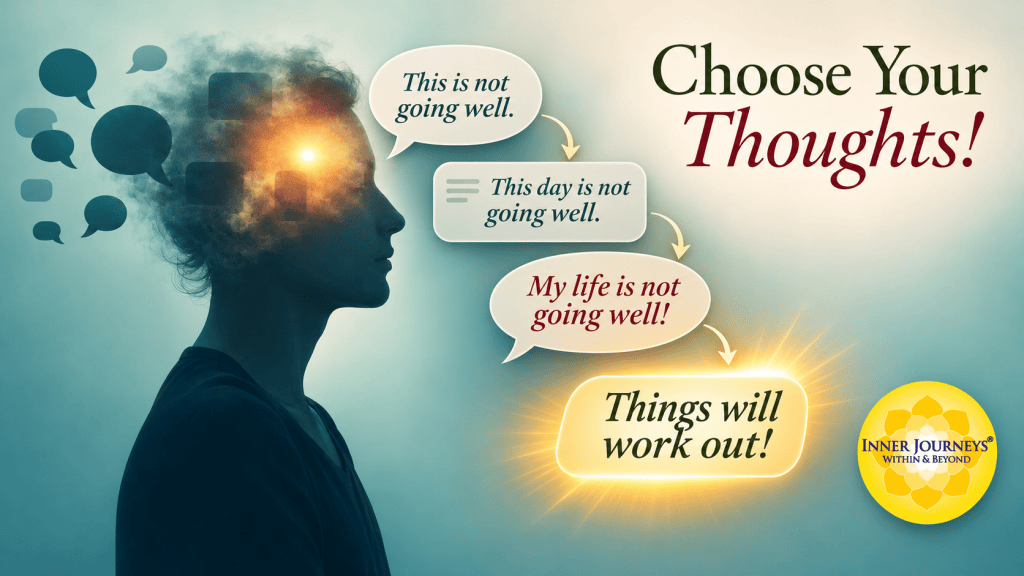
Have you noticed? How often we get caught up in a negative loop or spiral of thoughts.
When things get out of hand, when we feel frustrated, rejected or neglected, and it is not the best of days, we find ourselves in a dark space, with a dark cloud looming overhead. From “This is not going well”, we jump to “This day is not going well,” and before we realise what shows up on our mental feed is “My life is not going well!” Then, after half an hour or a few hours, and sometimes after a day, we suddenly question: “How did I get here?”
Soon, this can happen every day. We can get pissed off or irritated by almost anything. We develop a habit of looking for what is not working in our lives.
Much like social media, the brain works on an algorithm: what we focus on, we attract more of, because that is now a familiar neural pathway. Just as we consciously curate our social media feed by choosing what we engage with, we can curate our mental algorithm by choosing which thoughts we engage with.
The first step would be to develop mindfulness, and meditation is the ideal way to put it into practice. Meditation teaches us to observe. It teaches us to first observe our breath and then our thoughts. Soon, we learn to watch our thoughts and our internal dialogue objectively.
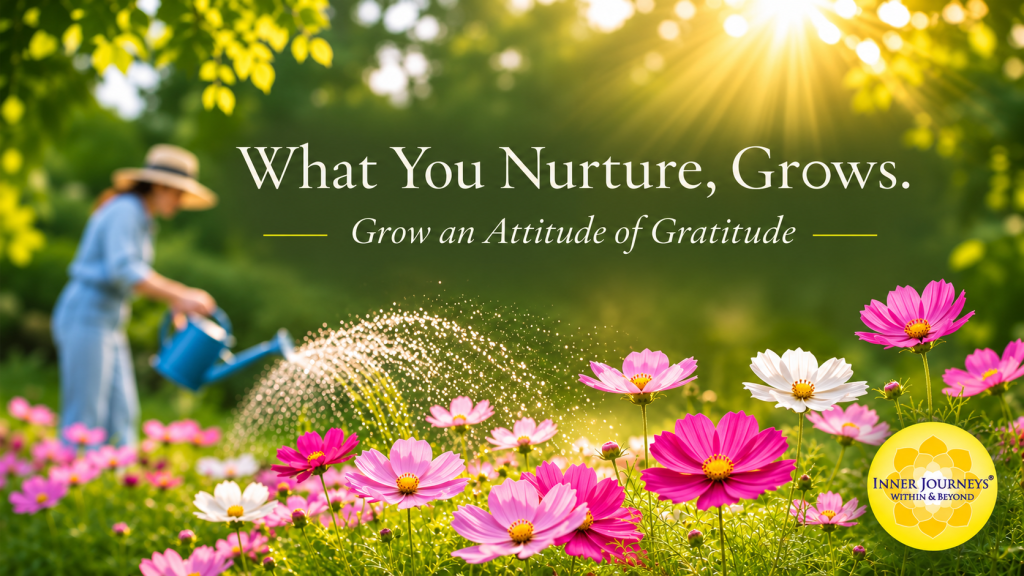
That way, we can learn not to indulge in negative thoughts or thought loops. Instead, we can choose. We can choose what thoughts we want to show up in our mental algorithm. What you nurture through your attention grows, good or bad. Why not grow an attitude of gratitude?
Not every thought that arises in our mind deserves our attention, and not every thought deserves to be believed or indulged in. That is the power of awareness put into practice.
Often, we do not get disturbed by life’s events themselves, but by our interpretation of them and our internal dialogue, which is often defeatist or pessimistic. What shows up on our mental algorithm is our responsibility.
We might have had difficult or even traumatic experiences in life, but we can still learn to consciously guide our thoughts and regulate our emotions. While we may not have had a choice in what happened to us, we can choose to work towards healing ourselves. We need not allow our past experiences to continue to dictate our internal dialogue, our emotional responses and the choices we make in the present.
We can access the various tools of healing available to us, such as Hypnotherapy and Psychotherapy, to heal our emotional wounds and address deeply ingrained patterns of thinking and behaving, sometimes learnt from our parents or environment during our growing years. But now we are adults; we can unlearn them. And be willing to make changes within.
Taking responsibility for our mental algorithm does not mean blaming ourselves for our suffering. We did the best we knew how to. It means taking charge of our healing and gradually reclaiming our power to choose.
Mindfulness gives us awareness; healing helps us address the roots of our patterns; and gratitude helps us develop a new way of looking at life.
Next, we can take a step forward and consciously choose dramatically opposite thoughts to change our algorithm. Every time we consciously choose a thought, we are participating in the creation of our mental algorithm. Plus, we feel empowered by the knowledge that we have the power to choose.
We can do that by starting our day by looking for what is going right in our lives and in our immediate environment. It can be the morning sunshine, the food we get to eat, or even a part of our body that is functioning well. Anything that we can be grateful for. Gratitude does not mean denying what is going wrong in our lives. It means not allowing what is going wrong to overshadow everything that is going right.
Gradually, with the practice of gratitude, we realise that we have a lot to be thankful for.

We begin to change not just the algorithm of our thoughts, but also the situations we attract and the situations we choose to indulge in. We don’t have to wait for something good to happen to feel grateful or blessed. We can begin by acknowledging the good that already exists in our lives. On any given day, there would be nothing extraordinary. Yet, there is so much to be grateful for. And that, my friend, is itself an extraordinary thing. Finding joy in the mundane and God in the details of our lives.
Having done that, we can take it a step further through prayer. We can offer a prayer of gratitude to the Universe, to God, or to any Higher Power we believe in, for helping us make our lives easier and more manageable.
Gratitude also teaches us to acknowledge how much we receive in life that is not entirely a result of our own efforts. We have had blessings in our lives, not just one or two, but many. We are not even aware of the many blessings that have protected us from the consequences of our own wrong choices and from dangers we may never have known about. When we think of some of this, it humbles us and gratitude becomes natural.
Initially, we may have to look for reasons to be grateful. Gradually, as our mental algorithm changes, we begin to notice them effortlessly. Make gratitude a daily practice. It is a skill we develop over time. Soon we realise that our reality has not changed. Our perception of it has. And that makes all the difference.
Gratitude is the right attitude to live by.
— Abhishek Joshi